

Table of Contents
- Why Senior Dogs Need Calming Support
- Signs of Cognitive Dysfunction in Dogs and When to Act
- Top Calming Products for Senior Dogs: Quick Comparison
- 1. Calming Donut Bed for Dogs & Cats: Orthopedic Support & Comfort
- 2. Waterproof Fleece Pet Bed: Easy-Care Comfort for Restless Nights
- 3. Banana Pet Bed: Enclosed Security for Anxious Seniors
- How to Manage Sundowning in Senior Dogs
- Natural vs. Pharmaceutical Calming Options: What Actually Works
Last Updated: August 26, 2026
Why Senior Dogs Need Calming Support
Aging brings physical and emotional challenges that many pet owners don't anticipate. As dogs enter their senior years, their brains change, their bodies ache, and their sense of security can unravel. This guide from Lola's Favorite Pet Gear breaks down the best calming products for senior dogs, helping you understand which solutions actually address the root causes of anxiety and restlessness in aging pets.
Senior dogs experience genuine neurological shifts. Their cognitive function declines, joint pain intensifies, and anxiety becomes a real medical issue. The challenge isn't finding any calming product; it's finding one that targets your dog's specific problem: noise sensitivity, separation anxiety, cognitive decline, or physical discomfort from arthritis.
Many pet owners assume all calming products work the same way. They don't. Some address behavioral anxiety through environmental comfort. Others support the nervous system chemically. A few tackle pain directly. A dog pacing at night due to cognitive dysfunction syndrome needs different support than one trembling during thunderstorms.
The products we cover here focus on what works: comfortable bedding that supports arthritic joints, environmental design that reduces stress triggers, and accessible solutions that don't require pharmaceutical intervention unless necessary.
Signs of Cognitive Dysfunction in Dogs and When to Act
Cognitive dysfunction syndrome (CDS) affects many aging dogs, particularly those over 10 years old (peer-reviewed research). The condition involves progressive brain changes that impair memory, learning, and awareness.
Common signs include disorientation (getting lost in familiar spaces), disrupted sleep-wake cycles, house soiling despite previous training, and changes in social behavior (aaha.org). Your dog might stare at walls, pace excessively, or seem confused about where they are.
Sundowning is one of the most recognizable CDS symptoms. As evening approaches, senior dogs become restless, anxious, and sometimes aggressive. They may whine, pace, or try to escape. This pattern reflects circadian rhythm disruption and reduced melatonin production in aging brains.
When to act: If you notice disorientation, nighttime restlessness, house soiling, or personality changes, schedule a veterinary exam. A vet can rule out medical causes (urinary tract infections, pain, thyroid issues) and discuss management strategies. Early intervention prevents behavioral escalation and improves quality of life.
Top Calming Products for Senior Dogs: Quick Comparison
The best calming products for senior dogs address three core needs: physical comfort, environmental security, and behavioral support. Some products excel at one; the best ones tackle multiple angles simultaneously.
Comparison Table
| Product | Price | Best For | Key Benefit | Placement |
|---|---|---|---|---|
| Calming Donut Bed | $111.99 | Joint pain + burrowing anxiety | Orthopedic support with security | Bedroom, living room |
| Waterproof Fleece Pet Bed | $72.99 | Restless sleepers + accidents | Easy cleanup + comfort | Any room |
| Banana Pet Bed | $48.99 | Anxious dogs needing enclosed spaces | Enclosed design + portability | Bedroom, quiet corner |
| Combination approach | $233.97+ | Maximum support | Layered solutions for multiple issues | Multiple rooms |
This comparison shows pricing reality: the best calming products for senior dogs often require combining multiple solutions. A dog with both arthritis pain and anxiety benefits from a supportive donut bed for joint relief plus an enclosed banana bed for security during stressful moments.

1. Calming Donut Bed for Dogs & Cats: Orthopedic Support & Comfort
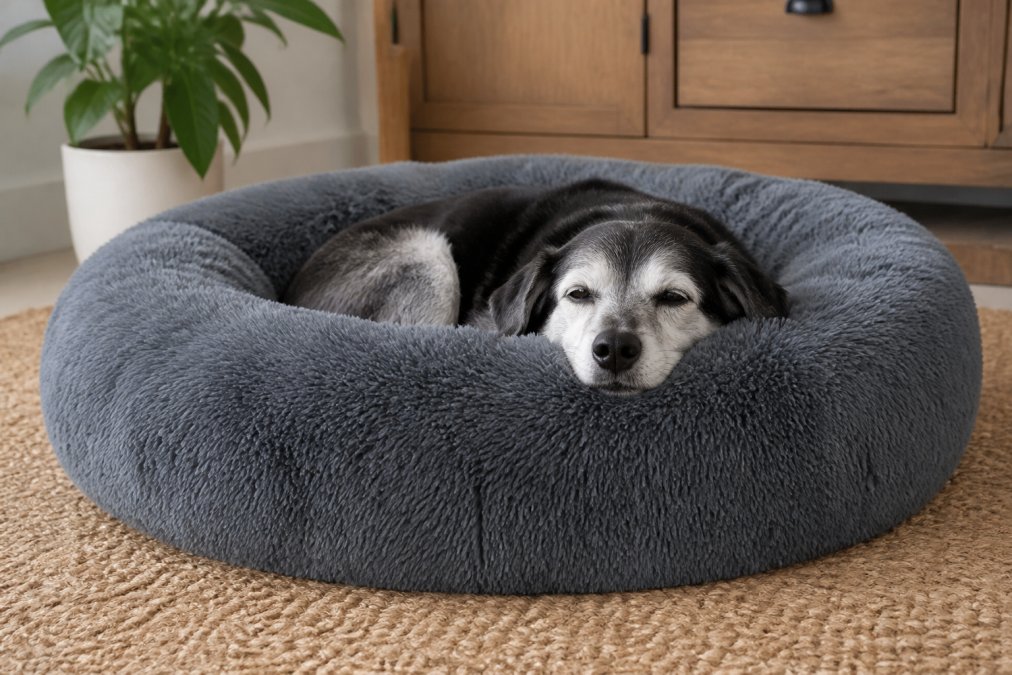
The Calming Donut Bed from Lola's Favorite Pet Gear is the top pick for senior dogs experiencing joint pain alongside anxiety. The raised rim provides head and neck support, critical for arthritic dogs who struggle to position themselves comfortably. The ultra-soft filling relieves joint and muscle pain while the deep, burrowing center mimics a mother's warmth, addressing both physical discomfort and psychological security needs.
The vegan faux shag fur mimics maternal warmth in a way flat bedding simply can't. Dogs burrow into the deep crevices, creating a nest-like environment that reduces anxiety. The anti-slip base prevents the bed from sliding across hardwood floors, a practical detail that matters when your senior dog is already unsteady.
The removable, machine-washable shell is essential for senior dogs prone to accidents. Urinary incontinence is common in aging pets; easy-care bedding prevents frustration and maintains hygiene without constant replacement.
What works: The orthopedic design genuinely helps arthritic dogs sleep longer and wake with less stiffness.
What doesn't: At $111.99, it's the priciest option. Some large dogs find the donut shape restrictive if they prefer stretching out flat.
Best for: Dogs over 8 years old with arthritis, joint pain, or mild-to-moderate separation anxiety.
2. Waterproof Fleece Pet Bed: Easy-Care Comfort for Restless Nights
Senior dogs often struggle with nighttime accidents due to age-related incontinence or cognitive dysfunction. The Waterproof Fleece Pet Bed from Lola's Favorite Pet Gear solves this practical problem while maintaining comfort.

The quilted, insulating fiber provides softness without the deep pile that traps urine. The waterproof base prevents messes from reaching your floors, critical when accidents happen multiple times per night. The spacious, rectangular design lets senior dogs stretch out or curl up depending on preference, accommodating dogs with mobility issues who struggle to curl into donut shapes.
What works: The waterproof feature genuinely prevents odor and floor damage.
What doesn't: It's less psychologically calming than an enclosed bed. Dogs seeking security may still prefer burrowing options.
Best for: Senior dogs with incontinence issues, large dogs needing space, or those who don't seek enclosed spaces.
At $72.99, this bed balances affordability with durability.
3. Banana Pet Bed: Enclosed Security for Anxious Seniors
The Banana Pet Bed from Lola's Favorite Pet Gear targets a specific anxiety profile: dogs that find comfort in enclosed, nest-like spaces. The peelable top with velcro strap creates a den-like environment that reduces stress through physical containment.

Semi-enclosed spaces work for some anxious dogs because they provide security without complete isolation. Your dog can peek out, monitor their environment, and retreat when overwhelmed. The lightweight, portable design lets you move it between rooms to keep your dog close during the day, then relocate it to a quiet bedroom at night.
What works: The enclosed design genuinely calms anxious dogs.
What doesn't: The enclosed design isn't ideal for dogs with claustrophobia or those preferring open spaces. Large dogs may find it cramped.
Best for: Anxious senior dogs with noise sensitivity or separation anxiety, and dogs that naturally seek enclosed spaces.
How to Manage Sundowning in Senior Dogs
Sundowning, the late-afternoon anxiety and restlessness that affects many senior dogs, responds well to environmental and behavioral management.

Sundowning reflects circadian rhythm disruption and reduced melatonin production in aging brains (peer-reviewed research). As daylight fades, some dogs become disoriented, anxious, or agitated.
Management strategies focus on creating structure and reducing triggers. Establish a consistent evening routine: dinner at the same time, a calming activity, and a designated rest space. Dim lights gradually as evening approaches, sudden darkness increases disorientation. Use a calming bed positioned in a quiet, familiar room where your dog can retreat.
Physical exercise earlier in the day (not evening) helps tire your dog before sundowning peaks. Noise management matters significantly. Close curtains to reduce external stimuli, use white noise to mask neighborhood sounds, and keep your dog away from high-traffic areas during sundowning peaks.
Many owners find that simply providing a secure, comfortable bed in a quiet location reduces sundowning severity.
Natural vs. Pharmaceutical Calming Options: What Actually Works
The choice between natural and pharmaceutical calming approaches depends on your dog's specific issue and severity.
Natural calming approaches include environmental modifications, supportive bedding, behavioral management, and plant-based supplements. These address anxiety through comfort, routine, and stress reduction. Natural options work best for mild-to-moderate anxiety: noise sensitivity, mild separation anxiety, or stress from environmental changes. They're safe long-term with minimal side effects.
Pharmaceutical options, sedatives, anti-anxiety medications, or behavioral drugs, target severe anxiety, aggression, or cognitive dysfunction directly. These work faster and more reliably for serious cases but carry potential side effects: drowsiness, dependency, or gastrointestinal upset.
The practical reality: most senior dogs benefit from a layered approach. Start with environmental management and supportive bedding (natural solutions). If anxiety persists or worsens, add pharmaceutical support under veterinary guidance. Some dogs need both simultaneously.
Drug-supplement interactions matter here. If your senior dog takes medications for other conditions, certain calming supplements can interfere. Always consult your vet before adding supplements, even natural ones.
Cost-benefit analysis reveals an important pattern. A supportive bed costs $50-$112 upfront and provides years of benefit. Supplements range from $15-$40 monthly. Pharmaceuticals typically cost $30-$80 monthly. The bed offers the best long-term value for dogs with chronic anxiety.
Palatability and administration matter for picky eaters. Some senior dogs refuse supplements or medications. A comfortable bed requires no administration, your dog benefits simply by using it. This makes bedding-based solutions more reliable for dogs resistant to pills or powders.
Senior dogs deserve comfort that matches their needs. The best calming products for senior dogs aren't one-size-fits-all, they're layered solutions addressing your specific dog's anxiety, pain, and sleep disruption. Whether your dog needs orthopedic support, enclosed security, or easy-care practicality, Lola's Favorite Pet Gear offers calming products designed for aging pets. Start with the solution that matches your dog's primary challenge, then add additional support as needed. Your senior companion will thank you with better sleep, reduced anxiety, and more peaceful evenings.
Frequently Asked Questions
Q: What is the best calming product for a senior dog with joint pain?
A: Orthopedic beds like the Calming Donut Bed ($111.99) are highly effective for senior dogs with joint pain. The raised rim provides head and neck support while the ultra-soft filling relieves muscle and joint discomfort, promoting deeper, more restorative sleep. Combined with proper veterinary care, these beds address both anxiety and physical comfort, two critical factors in senior canine wellness.
Q: Are calming supplements safe for senior dogs with kidney or liver issues?
A: Many calming supplements can interact with medications or stress compromised organs. Ingredients like melatonin, valerian root, and ashwagandha may affect kidney or liver function in sensitive dogs. Always consult your veterinarian before introducing any supplement, especially if your senior dog has existing organ issues or takes medications. Your vet can recommend safe alternatives or adjust dosages appropriately.
Q: How long does it take for calming products to work in senior dogs?
A: Environmental changes like soft bedding typically show immediate comfort benefits, though behavioral calming may take time as your dog adjusts. Supplements and pheromone therapies usually require time to show noticeable effects. Pharmaceutical options prescribed by your vet often work within hours. Consistency matters, results improve when you maintain the same routine and environment daily.
Q: What signs of cognitive dysfunction in dogs should I watch for?
A: Cognitive dysfunction syndrome (CDS) in senior dogs includes disorientation, sleep disruption, house training accidents, changed social behavior, and repetitive pacing. Dogs may seem confused about familiar spaces, become restless at night, or fail to recognize family members. These signs typically appear in dogs over 8 years old. Early recognition allows your vet to recommend management strategies like environmental enrichment, behavioral support, and sometimes medication to slow cognitive decline.
Q: Can I use multiple calming products together for my senior dog?
A: Combining products, such as a calming bed with supplements or pheromone therapy, can be effective, but avoid stacking multiple sedative supplements without veterinary guidance. A comfortable bed paired with behavioral management (routine, quiet spaces, gentle exercise) and veterinarian-approved supplements offers a balanced approach. Always inform your vet of all products you're using to prevent accidental overdosing or harmful interactions.
This article was written using GrandRanker