

Table of Contents
- Best Grooming Tools for Thick Fur: Top Picks
- Undercoat Rakes and Dematting Tools for Thick Coats
- Best Slicker Brushes for Thick Fur
- Deshedding Tools for Double-Coated Dogs
- How to Demat Thick Dog Fur: Step-by-Step Method
- Dog Grooming Tips for Thick Coats
- How to Choose the Right Brush for Your Dog's Coat
- Conclusion
Best Grooming Tools for Thick Fur: 2026 Guide
Last Updated: July 26, 2026
When dogs shed, they shed everywhere. A Golden Retriever or Husky can leave enough loose hair on your furniture each week to knit a second dog. The right grooming tools for thick fur prevent matting, improve coat health, and make grooming faster for both you and your pet. This guide from Lola's Favorite Pet Gear covers the best grooming tools for thick fur, including undercoat rakes, slicker brushes, and deshedding tools that actually work on dense double coats.
Quick Comparison Table
| Tool Type | Best For | Key Feature | Price Range |
|---|---|---|---|
| Undercoat Rake (Double-Sided) | Heavy shedding, double coats | Dual-row teeth for deep penetration | $15-$25 |
| Slicker Brush (Professional-Grade) | Detangling, fluffing | Long dense pins at 45-degree angle | $60-$80 |
| Deshedding Tool | Removing loose undercoat | Stainless steel blade reaches deep | $30-$60 |
| Single-Row Dematting Rake | Severe mats, thick knots | Reversible blade, rounded tips | $14-$20 |
| High-Velocity Pet Dryer | Post-grooming drying | Adjustable speed, low noise | $150-$250 |
Undercoat Rakes and Dematting Tools for Thick Coats
Undercoat rakes are the workhorse of thick-fur grooming. These tools have multiple rows of teeth that penetrate deep into the coat to grab loose undercoat hair without damaging the topcoat. For dogs with double coats, German Shepherds, Huskies, Australian Shepherds, Golden Retrievers, an undercoat rake is essential during shedding season.
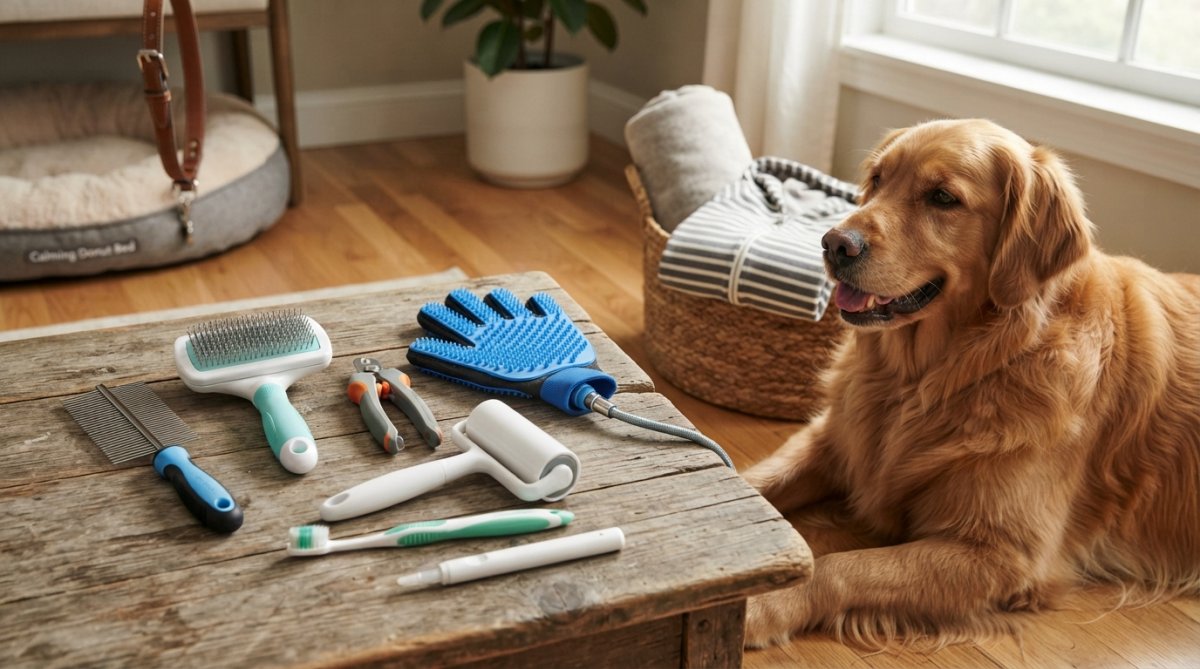
The Maxpower Planet Pet Grooming Brush is reversible: one side has nine teeth for tackling mats, while the other has 17 teeth for removing loose undercoat. The stainless steel teeth and rounded edges protect your dog's skin. Most owners report that one 10-minute session removes more loose hair than hand-brushing for a week.
The Safari Double Row Undercoat Rake features rotating pins that adjust to your dog's coat density, reducing pulling and discomfort. This makes it gentler on sensitive dogs than fixed-tooth rakes. The Andis Fine-Tooth Deshedding Rake offers stainless steel teeth with blunt edges for dogs with sensitive skin, removing up to 90% of loose undercoat without scratching.
Best Slicker Brushes for Thick Fur
Slicker brushes have short, tightly packed wires designed to remove mats, tangles, and loose hair. For thick-furred dogs, a professional-grade slicker brush makes the difference between a 30-minute grooming session and a two-hour battle.
The Chris Christensen Big G Slicker Brush is the gold standard among professional groomers. Its extra-long, dense pins penetrate thick coats without flattening them, with pins bent at a 45-degree angle that lifts hair gently. Groomers choose this for Goldendoodles, Poodles, and other dogs with cottony or curly coats that mat easily.
The Les Poochs Pro Brush with Firm Flexible Head offers a middle ground. Its firm, flexible head contours to your dog's body shape, making it easier to cover large areas without hand fatigue. The bristles remove undercoat efficiently while preventing mats where they form.
For budget-conscious owners, a basic slicker brush works for maintenance between professional grooming. Professional-grade brushes have longer wires and denser bristles that penetrate deeper and last longer.
Deshedding Tools for Double-Coated Dogs
Deshedding tools are engineered to remove loose undercoat without cutting or damaging guard hairs. The FURminator Undercoat deShedding Tool is the most recognized name in this category. Its stainless steel deshedding edge reaches deep through the topcoat to grab loose undercoat, and the FURejector button releases collected hair instantly. Many owners report it removes 90% of loose undercoat in a single session.
The Tuff Pupper Undercoat & Dematting Rake combines both functions with a reversible blade at under $14. One side handles dematting, the other removes loose undercoat. The rounded edges protect skin, and the comfort grip fits both left- and right-handed users.
For extremely thick or matted coats, start with a dematting rake to break up knots, then finish with a deshedding tool to remove loose undercoat.
How to Demat Thick Dog Fur: Step-by-Step Method
Matting happens when loose undercoat tangles with topcoat hair, creating dense knots that trap moisture and bacteria. A systematic approach prevents pain and skin damage.
Step 1: Assess the Mat Severity Run your fingers through the mat. If you can feel skin underneath and the mat moves, it's surface-level. If the mat is tight against the skin and doesn't move, it's embedded and may require professional grooming.
Step 2: Spray with Detangling Solution Apply a dog-safe detangling spray to the mat. This lubricates the hair and reduces pulling. Never brush a dry mat. Let the solution sit for 30 seconds.
Step 3: Use a Dematting Rake on the Mat's Edge Start at the outside edge of the mat, not the center. Use the dematting rake with gentle, short strokes, working from the skin outward. If the mat doesn't budge after 10 strokes, stop to avoid pain and skin irritation.
Step 4: Work Deeper Gradually Once the outer layer loosens, work deeper into the mat with slightly longer strokes. The goal is to separate the mat into smaller sections, not pull it out in one piece.
Step 5: Switch to a Slicker Brush Once the mat is mostly separated, use a slicker brush to remove remaining tangles and loose undercoat.
Step 6: Dry Thoroughly Wet mats re-form quickly. Use a high-velocity dryer or towel to dry the area completely.
When to Use Dematting Tools vs. Clippers
If a mat is within a quarter-inch of the skin, clippers are faster and safer than dematting tools. The Wahl Thick Animal Coat Pet Clipper powers through matted fur without clogging. For severely matted dogs, a professional groomer is worth the cost.
Dog Grooming Tips for Thick Coats
Thick-coated dogs need more frequent grooming than single-coated breeds. A Golden Retriever needs brushing 3-4 times per week during shedding season. Start grooming early in your dog's life, puppies that are brushed regularly become adults who tolerate grooming.
Brush in the direction of hair growth using long, smooth strokes rather than short, jerky motions.
Managing Shedding Season with the Right Tools
Shedding season typically occurs twice per year: spring and fall. During these periods, daily grooming becomes essential. A single session with an undercoat rake removes more loose hair than a week of hand-brushing.
Regular brushing during shedding season reduces airborne dander by 60%, which benefits dogs with allergies and owners with respiratory sensitivity. Invest in a high-velocity dryer for shedding season. After bathing, it forces water and loose undercoat out of the coat in minutes. The HomeRunPet High Velocity Pet Dryer includes 99 adjustable speed settings and 3 temperature modes.
Post-Grooming Skin Health and Tool Care
After grooming, inspect your dog's skin for redness, irritation, or small cuts. If you see any, apply a pet-safe moisturizer or consult your vet.
Clean your grooming tools after every session. Loose hair left in a brush becomes a breeding ground for bacteria and fungi. Rinse slicker brushes under warm water, use a fine-tooth comb to remove trapped hair, and air-dry completely. Store tools in a dry place to prevent rust and mold growth.
How to Choose the Right Brush for Your Dog's Coat
Understanding your dog's coat type is the first step to choosing the right tool.
Double coats have a soft, dense undercoat beneath longer guard hairs. German Shepherds, Huskies, Golden Retrievers, and Australian Shepherds have double coats and need undercoat rakes and deshedding tools.
Single coats have no undercoat. Boxers and Weimaraners need a rubber curry brush or soft slicker brush, not aggressive deshedding tools.
Curly or cottony coats (Poodles, Doodles, Bichons) mat easily and need frequent slicker brushing. A professional-grade slicker brush is more effective than a pin brush.
Wire or coarse coats (Terriers, some Schnauzers) need a slicker brush and metal comb.
Breed-Specific Grooming Protocols
German Shepherds have a dense undercoat that sheds year-round. During shedding season, daily grooming with an undercoat rake is standard. Many GSD owners use a high-velocity dryer after bathing to remove loose undercoat before it dries in the coat.
Golden Retrievers and Labrador Retrievers require 3-4 grooming sessions per week during shedding season. The Pet Fur Knot Remover Comb from Lola's Favorite Pet Gear is designed specifically for removing mats from long-haired breeds.
Huskies have an exceptionally thick double coat. A single grooming session during shedding season can remove enough loose hair to fill a pillowcase. An undercoat rake is essential.
Australian Shepherds have a medium-length double coat prone to matting. Regular slicker brushing (2-3 times per week) prevents mats. During shedding season, add undercoat raking 3-4 times per week.
Doodles have curly or wavy coats that mat easily. Daily slicker brushing is necessary, and many Doodle owners see a professional groomer every 6-8 weeks.
Ergonomic Handle Design for Comfort
Grooming a thick-coated dog takes time. A brush with a poor handle causes hand fatigue and wrist pain. Professional-grade brushes invest in ergonomic handle design.
Look for non-slip, contoured handles at least 2-3 inches long so your fingers don't touch the brush head. Weight matters too, a lightweight brush causes less fatigue than a heavy one. The Safari Double Row Undercoat Rake, Maxpower Planet Pet Grooming Brush, and Tuff Pupper Undercoat & Dematting Rake all feature ergonomic handles designed for extended use.
Conclusion
Grooming thick-furred dogs without the right tools is frustrating and time-consuming. Mats form, shedding explodes during season changes, and your dog becomes uncomfortable. The best grooming tools for thick fur, undercoat rakes, slicker brushes, and deshedding tools, solve these problems when used consistently.
Lola's Favorite Pet Gear offers specialized grooming solutions designed for thick coats, including the Pet Fur Knot Remover Comb with dual-sided design for both dematting and deshedding. The tool features rounded blade tips for skin-safe grooming and an ergonomic handle for extended comfort. Start with the right tools, establish a grooming routine, and you'll spend less time managing mats and more time enjoying your dog's healthy, beautiful coat.
Frequently Asked Questions
What kind of brush is best for a dog with thick undercoat?
For thick undercoats, slicker brushes and undercoat rakes are most effective. Slicker brushes like the Chris Christensen Big G feature long, dense pins that penetrate deep into the coat without scratching sensitive skin. Undercoat rakes with stainless steel blades, such as the Andis Fine-Tooth Deshedding Rake ($31.99), remove loose hair while protecting the topcoat. Double-sided rakes offer versatility: use the fine-tooth side for deshedding and the coarser side for dematting. For severe matting, start with a dematting tool before using a rake.
How often should you use deshedding tools for double-coated dogs?
During shedding season (typically spring and fall), deshedding tools should be used 2-3 times per week to prevent matting and reduce loose hair buildup. Outside shedding season, weekly grooming maintains coat health. Overuse of harsh deshedding tools like the FURminator can damage the topcoat, so rotate between gentler slicker brushes and rakes. Always brush in the direction of hair growth and check for mats before each session. Professional groomers recommend a maintenance schedule tailored to your breed's coat density.
Can you use a slicker brush and undercoat rake together?
Yes, using both tools together is ideal for thick-furred dogs. Start with an undercoat rake to remove deep mats and loose undercoat, then finish with a slicker brush to smooth the topcoat and remove remaining tangles. This two-step approach prevents damage and ensures thorough grooming. The Pet Fur Knot Remover Comb ($36.99) works well for initial dematting, followed by a professional slicker brush for finishing. Always work gently to avoid irritating sensitive skin, especially after deshedding.
What grooming tools work best for sensitive-skinned dogs with thick fur?
Dogs with sensitive skin need brushes with rounded, blunt teeth and flexible bristles. The Safari Double Row Undercoat Rake features rotating pins that reduce pulling and discomfort. Slicker brushes with angled pins, like the Chris Christensen Big G, are designed specifically to prevent scratching. Avoid harsh deshedding tools and never brush aggressively. The Pet Bath & Massage Glove ($60.99) offers a gentler alternative for light grooming and bonding. Always test new tools on a small area first and watch for signs of irritation like redness or excessive scratching.
How do professional groomers handle extremely matted thick coats?
Professional groomers assess mat severity before choosing tools. For mild matting, they use dematting rakes and slicker brushes progressively. For severe mats close to the skin, they may recommend a full coat blowout using a high-velocity dryer (like the HomeRunPet model) to separate mats without cutting. In extreme cases, clippers like the Wahl Thick Animal Coat Pet Clipper (around $150-$200) may be necessary. Prevention through regular grooming, weekly for double-coated breeds, is far more effective than treating matting after it develops.
Ready to stop the matting cycle? Explore Lola's Favorite Pet Gear's grooming collection and discover tools designed for thick-furred dogs. Shop Now and make grooming easier for both you and your pet.
This article was written using GrandRanker