

Table of Contents
- What Makes a High Quality Dog Sweater Worth the Investment
- How to Measure a Dog for a Sweater: The Right Way
- Dog Sweater Sizing Guide: From XS to XL
- Choosing the Right Material: Wool, Acrylic, Fleece, and More
- Best Dog Sweaters for Winter: Top Options for Cold Weather
- Sweater Tolerance Training and Comfort
- Care, Washing, and Durability: Making Your Investment Last
- Sustainability and Ethical Manufacturing in Dog Apparel
Last Updated: August 8, 2026
What Makes a High Quality Dog Sweater Worth the Investment
Quality dog sweaters last longer, fit better, and keep your dog comfortable, making them worth the investment. High quality sweaters use natural fibers like merino wool or alpaca that breathe better than synthetics, regulate temperature effectively, and resist pilling. Reinforced seams, proper sizing, and thoughtful design details like harness-compatible openings separate sweaters that last from those that disappoint.
At Lola's Favorite Pet Gear, we've seen that pet owners who invest in quality sweaters report fewer returns, longer product lifecycles, and dogs that actually tolerate wearing them. A sweater that fits properly and feels good against the skin becomes something your dog won't fight you about putting on. The real cost of a cheap sweater isn't the price tag, it's replacing it multiple times a season and having a cold dog because the garment lost its shape.
How to Measure a Dog for a Sweater: The Right Way
Getting accurate measurements is the most important step in finding a sweater that actually fits. Use a soft measuring tape while your dog stands naturally, without pulling tight. Have someone help if possible, and take measurements on the same day you plan to order.
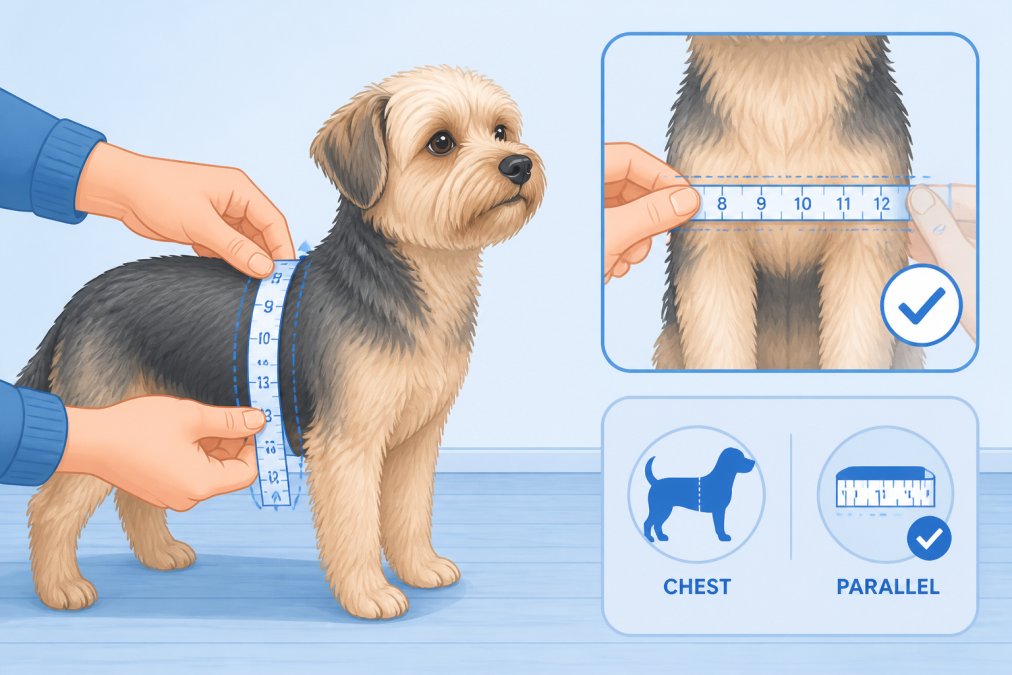
Key Measurements: Chest Girth, Back Length, and Neck Circumference
Chest girth wraps around the widest part of your dog's rib cage, just behind the front legs. This determines whether the sweater stays in place. Dogs with barrel-shaped chests often have larger measurements than expected.
Back length runs from the base of your dog's neck to the base of the tail. This controls coverage and prevents bunching or restriction. Measure along the spine, keeping the tape straight.
Neck circumference wraps around the base of the neck where a collar would sit. This determines whether the sweater slips over the head easily. It's the measurement most people underestimate.
Using a Size Chart to Find Your Dog's Perfect Fit
Compare your three measurements directly to the brand's size chart, not to weight or breed. Brands vary significantly in sizing. Look for charts that include all three measurements, weight-only charts are unreliable since body shape matters more than weight.
When measurements fall between two sizes, choose the larger one. A slightly loose sweater is more comfortable than one that restricts movement.
Dog Sweater Sizing Guide: From XS to XL
Most quality brands offer XS through XL sizing, with some extending to XXL for giant breeds.
XS and S fit dogs roughly 2-15 pounds, including toy breeds and Chihuahuas. These sweaters have shorter back lengths and narrower chest girths with proportionally smaller neck openings.
M and L cover 15-50 pounds, fitting most popular breeds like Beagles, Cocker Spaniels, Labs, and Golden Retrievers. This range offers the widest variety of styles and materials.
XL and XXL serve dogs over 50 pounds. Giant breeds need significantly deeper chest girths and longer back lengths. Not all brands offer these sizes.
Sizing for Small Breeds vs. Large Breeds
Small breeds have proportionally larger necks relative to their chests compared to large dogs. A sweater sized purely by weight often has a neck opening that's too tight. The Striped Dog Hoodie Winter Outfit from Lola's Favorite Pet Gear addresses this with true XS and S sizing with proportional neck openings.

Large breeds face the opposite problem: finding sweaters long enough without excess bunching at the shoulders. Back length becomes critical. When you can't find an exact match, prioritize back length, you can add a harness over a slightly loose sweater, but you can't extend one that's too short.
Handling Oddly-Shaped Dogs and Unusual Body Types
Dachshunds, Corgis, and mixed breeds with unusual proportions are difficult to fit. Prioritize back length first, then chest girth. If those two measurements match, the sweater will work even if the weight range seems off. Many quality brands note which breeds they fit well. Order from retailers with easy returns, measure your dog in multiple sweaters to understand their proportions, and keep notes. After 2-3 orders, you'll know your dog's typical size across brands.
Choosing the Right Material: Wool, Acrylic, Fleece, and More
The material determines warmth, durability, breathability, and care requirements. No single material is best for every situation.
Natural Fibers: Warmth and Breathability
Merino wool and alpaca are premium options. Merino wool is soft, temperature-regulating, and naturally antimicrobial, resisting odors better than synthetics. Alpaca is warmer than wool while remaining lightweight, ideal for serious insulation without bulk. Both fibers breathe, preventing overheating in mild weather.
The Chilly Dog Alpaca Argyle Dog Sweater is hand-knit from 100% sheep wool or alpaca, offering exceptional warmth and fitting barrel-chested dogs comfortably due to inherent knit stretch. These sweaters are machine washable in cold water and lay flat to dry. Natural fiber sweaters cost $40-60 but last for years with proper care. The tradeoff: they require careful washing and aren't waterproof.
Synthetic Options: Durability and Easy Care
Acrylic, polyester, and fleece blends are durable, machine washable on normal cycles, and resistant to pilling if made well. The Gold Paw Series Stretch Fleece uses custom-milled recycled polyester and spandex in a 4-way stretch blend, offering flexibility for active dogs and easy on/off. The Ruffwear Climate Changer Pullover uses 75% recycled polyester fleece with an anti-pilling finish, lightweight enough for travel and quick-drying.
Synthetic sweaters typically cost $15-60 and require minimal maintenance. The downside: they don't breathe as well as natural fibers and shed microplastics when washed.
Allergy-Friendly and Hypoallergenic Materials
Bamboo blends, organic cotton, and certain synthetic blends minimize allergic reactions. Bamboo is naturally hypoallergenic, moisture-wicking, and soft. Organic cotton avoids pesticide residues that irritate sensitive skin.
For dogs with known allergies, test the material on a small patch of skin before committing to a full sweater. Keep records of what works and what doesn't.
Best Dog Sweaters for Winter: Top Options for Cold Weather
Winter-ready sweaters need serious insulation, weather resistance, and a fit that accommodates layering.
Premium Hand-Knit Options for Maximum Warmth
The Chilly Dog Alpaca Argyle Dog Sweater is hand-knit by Fair Trade artisans in South America using 100% sheep wool or alpaca. The knit construction provides natural stretch, and the dense weave traps warm air effectively. At $39.99 and up, these sweaters last 3-5 years. The Pendleton Westerley Dog Sweater offers iconic style with genuine warmth, made from 100% acrylic and machine washable at $54.
Waterproof and Weather-Resistant Choices
The Hurtta Monsoon Coat II is engineered for wet conditions with fully taped waterproof seams, denser outer fabric that repels dirt, and an adjustable waterproof inner collar at $85.95. The Canada Pooch Waterproof Sweater combines water-repellent outer knit with an inner waterproof membrane and soft fleece lining at $27.38, with a pullover design and half-zip for easy on/off.
The Fleece Padded Dog Harness Coat from Lola's Favorite Pet Gear ($63.99) integrates warmth and harness compatibility, eliminating the need for a separate harness. The Warm Fur Pet Winter Coat ($56.99) provides full coverage with waterproof, cozy fabric for small and medium dogs. The Waterproof Dog Harness Jacket ($60.99) combines warmth and control in a single garment. The Striped Dog Hoodie Winter Outfit ($56.99) delivers style without sacrificing function, with hoodie construction providing extra neck coverage.

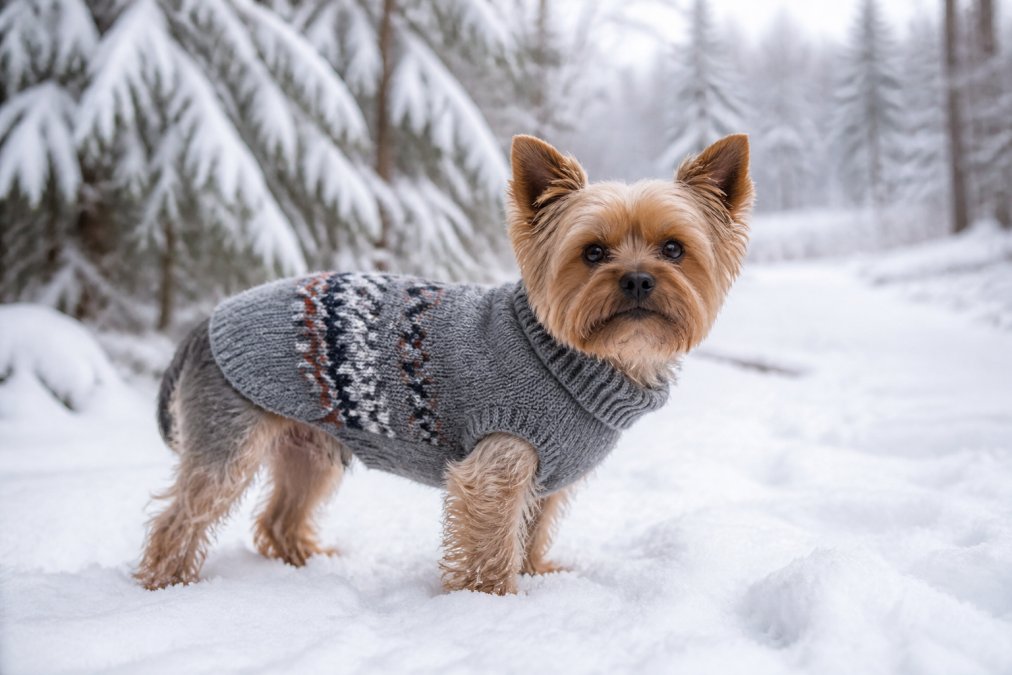
Sweater Tolerance Training and Comfort
Many dogs resist wearing sweaters initially. Training prevents daily battles and ensures they'll actually wear it when needed.
Start by introducing the sweater without putting it on, let your dog sniff it and become familiar with it. Reward curiosity with treats and praise. Next, drape the sweater over your dog's back for a few seconds without fastening. Reward calm behavior and gradually increase duration. Only after your dog accepts wearing the sweater should you add closures or leave it on longer.
Wear the sweater yourself for short periods so your dog sees it as normal. Once your dog tolerates it indoors, practice brief outdoor walks starting with 5-10 minutes. Most dogs become comfortable within 2-3 weeks of consistent exposure.
A properly fitting sweater makes tolerance training easier. Discomfort creates resistance; comfort creates acceptance.
Care, Washing, and Durability: Making Your Investment Last
How you care for a sweater determines whether it lasts one season or five.
Machine Washable vs. Hand-Wash Requirements
Most quality dog sweaters are machine washable, but use cold water and gentle cycles to prevent shrinkage and fading. Natural fiber sweaters like Chilly Dog Alpaca require cold water and lay-flat drying, never use the dryer. Synthetic and fleece sweaters are more forgiving but benefit from delicate cycles and lay-flat drying.
Hand-knit options require hand-washing: soak in cool water with gentle soap, rinse thoroughly, and lay flat to dry. This extends the life of premium sweaters significantly. Check the care label before washing.
Durable Construction and Long-Term Value
Durability starts with construction quality. Reinforced seams, finished edges, and quality stitching separate sweaters that last from those that unravel. Examine seams when you receive a sweater, they should be straight, even, and tight.
Quality acrylic resists pilling better than cheap acrylic. Natural fibers hold their shape better than low-grade synthetics. Hand-knit sweaters maintain structure through dozens of washes due to knit density.
Avoid sweaters with loose threads, unfinished edges, or fragile seams. Store sweaters in a cool, dry place during off-season. A high quality sweater at $50-60 lasting 3-5 years costs roughly $10-20 per year, while a budget sweater at $15 lasting one season costs $15 per year.
| Sweater Type | Starting Price | Best For | Durability | Care |
|---|---|---|---|---|
| Hand-knit wool/alpaca | $39.99+ | Maximum warmth, ethical sourcing | 3-5 years | Lay flat dry, cold water |
| Waterproof/weather-resistant | $27.38-$85.95 | Wet climates, active dogs | 2-3 years | Machine wash gentle |
| Fleece/synthetic blend | $15.99-$60.99 | Easy care, versatility | 1-2 years | Machine wash normal |
| Harness-integrated | $56.99-$63.99 | Convenience, single-piece gear | 2-3 years | Machine wash gentle |
Sustainability and Ethical Manufacturing in Dog Apparel
Pet owners increasingly care about where products come from and how they're made. The Chilly Dog Alpaca Argyle sweaters are hand-knit by Fair Trade artisans, ensuring fair wages and safe working conditions. The Gold Paw Series Stretch Fleece uses custom-milled recycled polyester, and the Ruffwear Climate Changer Pullover is made from 75% recycled polyester.
Bluesign certification indicates strict environmental and social standards in manufacturing. The most sustainable sweater is the one that lasts longest, a hand-knit sweater worn for 5 years has lower environmental impact per wear than a budget sweater replaced annually.
When evaluating sustainability, look for transparency. Brands should clearly state material sourcing, manufacturing location, and certifications. Vague claims without specific details are marketing language.
Finding the right high quality dog sweater requires measuring carefully, understanding materials, and matching the sweater to your dog's actual needs. The investment in quality, whether hand-knit alpaca from Chilly Dog, waterproof protection from Hurtta, or the practical harness integration of Lola's Favorite Pet Gear's collection, pays off through durability, comfort, and a dog that actually tolerates wearing it.
Start with accurate measurements, research sizing carefully, and prioritize fit over price. A sweater that fits well and feels good becomes a reliable part of your winter routine. Get started with Lola's Favorite Pet Gear's Winter Collection and discover how the right sweater enhances your dog's comfort and your peace of mind on cold-weather walks.
Frequently Asked Questions
How do I know if my dog actually needs a sweater?
Most dogs with thin coats, small breeds, senior dogs, or those with low body fat benefit from extra warmth in cold weather. Short-haired breeds like Chihuahuas, Greyhounds, and Italian Greyhounds feel cold easily. If your dog shivers, seeks warmth indoors, or shows reluctance to go outside in cool weather, a sweater helps. Dogs with thick, double coats like Golden Retrievers rarely need one except in extreme cold. Watch your dog's behavior, hesitation to walk or wanting to come inside quickly signals discomfort.
What's the difference between high quality dog sweaters and budget options?
High quality dog sweaters use durable materials like natural wool, alpaca, or recycled polyester blends that withstand multiple washings. They feature reinforced seams, better fit through proper sizing, and often include features like moisture-wicking or waterproofing. Budget options typically use thinner fabrics that pill or tear after a few months. Premium sweaters from brands like Chilly Dog ($39.99+) and Ruffwear ($59.99+) last years, while basic hoodies ($9.99-$16.38) may need replacing annually. Durability, comfort, and proper fit justify the investment.
How do I measure my dog for a sweater to ensure proper fit?
Take three key measurements: chest girth (around the widest part of the chest), back length (from the base of the neck to the tail), and neck circumference. Use a soft measuring tape and keep it snug but not tight. Measure while your dog stands naturally. Compare these measurements to the size chart before ordering. For oddly-shaped dogs, measure the widest point of the body and choose based on that. Many high quality retailers offer detailed size guides, always reference these rather than guessing.
Are wool sweaters safe for dogs with sensitive skin?
Pure wool sweaters can irritate sensitive skin if the fiber is coarse or the dog has allergies. However, fine merino wool and alpaca wool are softer and less likely to cause irritation. If your dog has sensitive skin, look for hypoallergenic options like fleece blends or acrylic sweaters, or test with a short wearing period first. Chilly Dog's alpaca sweaters ($39.99+) are handcrafted from natural fibers and work well for many dogs. Always monitor your dog for scratching or redness when introducing a new sweater.
Can dogs wear sweaters all day, and do they restrict movement?
Dogs can wear sweaters for extended periods, but they should be removed indoors if your home is warm to prevent overheating. Well-fitting sweaters don't restrict movement when sized correctly. Four-way stretch fabrics like those in Gold Paw Series ($32.00) allow full range of motion. Harness-compatible designs with cutouts prevent binding. Avoid sweaters that are too tight or too long, as these can cause discomfort. Monitor your dog during activity, if they seem restricted or overheat, remove the sweater. Most dogs adapt quickly to wearing them.
This article was written using GrandRanker