

Table of Contents
- Quick Comparison: Durable Cat Furniture for Small Spaces
- How We Selected These Options
- Wall-Mounted Cat Furniture: Maximizing Vertical Space
- Best Cat Trees for Small Apartments
- 1. The Refined Feline Lotus Cat Tower
- 2. K&H Pet Products Kitty Sill EZ Window Mount
- 3. Catit Vesper V-Box Small
- 4. On2Pets Cat Tree with Leaves (60-inch)
Durable Cat Furniture for Small Spaces: 10 Best Options
Last Updated: August 4, 2026
When apartment living means sacrificing feline comfort, you're solving the wrong problem. Cats in small spaces don't need less enrichment, they need smarter vertical solutions. Durable cat furniture for small spaces combines engineered durability with minimalist design, turning walls and corners into climbing zones that save floor space while keeping your cat mentally stimulated and physically active.
Quick Comparison: Durable Cat Furniture for Small Spaces
| Furniture Type | Best For | Footprint | Price Range | Key Advantage |
|---|---|---|---|---|
| Wall-mounted shelves | Renters & space-savers | 12-24 inches | $150-$250+ | Zero floor space |
| Window-mounted beds | Sun-loving cats | Window sill only | $35-$50 | Dual-purpose perch |
| Compact multi-level trees | Budget-conscious | 24-30 inches | $65-$130 | Multiple activities in one unit |
| Modular wall systems | Custom layouts | Variable | $50-$160+ per shelf | Infinite configuration options |
| Freestanding compact towers | Apartment-friendly | 20-28 inches | $100-$300 | Stability without installation |
How We Selected These Options
We evaluated each option against five core metrics: durability of materials, weight capacity relative to footprint, ease of installation for renters, longevity of replacement parts, and honest customer feedback about real-world performance.
Durability matters most because a cat tree that sheds carpet fibers or wobbles after six months isn't solving your space problem, it's creating a new one. We prioritized solid wood and engineered wood with verified weight ratings, sisal rope that withstands aggressive scratching, and modular designs where worn components can be replaced.
Weight capacity versus footprint is critical. A 50-pound weight capacity on a unit with a 20-inch footprint means stability. We excluded any option where the base seemed undersized for the height.
Wall-Mounted Cat Furniture: Maximizing Vertical Space
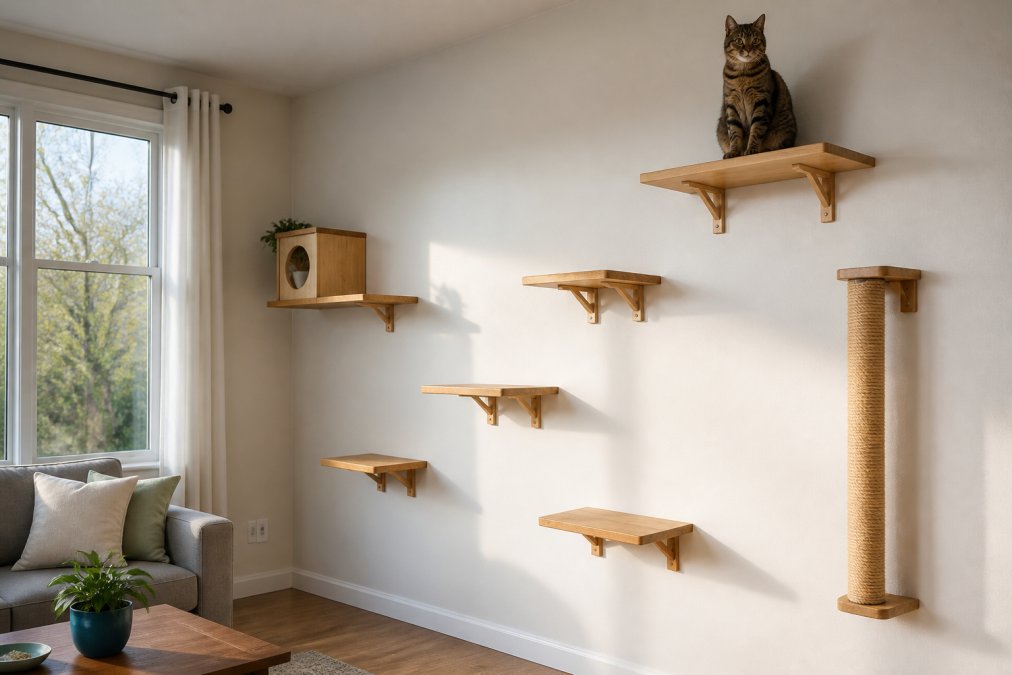
Wall-mounted solutions are ideal for small apartments. They use vertical height, the one dimension most people ignore. A single wall-mounted shelf takes up less floor space than a litter box but gives your cat a perch, vantage point, and retreat.
Cats feel safer when elevated. A wall shelf at eye level gives your cat a command post where they can observe the room without being in the middle of it. This matters for anxious cats and multi-cat households where vertical separation manages territorial conflict.
Installation Considerations for Renters
Renters face a specific constraint: permanent wall damage voids security deposits. Most wall-mounted cat furniture requires either stud mounting (permanent) or adhesive strips (which often fail under a cat's weight and jumping impact).
The Refined Feline Lotus Branch Cat Shelf mounts into studs with professional-grade construction. For true rental-friendly options, consider window-mounted alternatives or freestanding towers. Window mounts use suction cups that leave no marks. Freestanding pieces need no installation, just placement.
Weight distribution matters. A single shelf rated for 50 pounds needs a stud mount. Multiple shelves distribute load across several mounting points, reducing individual stress.
Best Cat Trees for Small Apartments
Freestanding cat trees offer a middle ground: no installation required, but designed around compact footprints. The best small-apartment cat trees use vertical stacking rather than horizontal sprawl. A 60-inch tall tree with a 24-inch square base takes up less floor space than a standard desk while providing multiple perches, hiding spots, and scratching surfaces.
Material quality directly impacts durability. Solid wood frames with sisal-wrapped posts outlast particleboard alternatives by years. The best compact cat trees include multi-functional elements: a hideaway condo at the base, mid-level perches for lounging, and a top platform for observation.
1. The Refined Feline Lotus Cat Tower, Best Overall Design
The Refined Feline Lotus Cat Tower is the editorial pick for apartment dwellers who prioritize durability and aesthetics equally. This is furniture that doesn't embarrass your interior design.
Constructed from sturdy plywood with oak veneer and furniture-grade stain, the Lotus Tower has a footprint of approximately 24 inches square and stands 36 inches tall. The stepped platform design lets cats climb naturally without the typical "tower of stacked boxes" look. Each platform is deep enough for lounging, and the sisal scratchpad is positioned vertically rather than wrapped around a post, reducing visual bulk.
The hideaway condo at the base is genuinely cozy. Removable, washable cushions mean you can refresh the look and maintain hygiene without replacing the entire unit. Replacement carpet surfaces and sisal pads are available separately, extending the tower's lifespan indefinitely.
Where the Lotus excels: stability. The base is weighted and wide enough that even aggressive jumping doesn't produce wobble. The oak finish resists scratching better than painted alternatives.
The limitation: price. At $430-$460, it's a significant investment. Assembly is required, and the weight (approximately 45 pounds) means you'll want a second person for setup.
Best for: Apartment owners who want a durable, beautiful cat tree that doubles as home decor and will last 5+ years with minimal maintenance.
2. K&H Pet Products Kitty Sill EZ Window Mount, Best for Space-Starved Apartments
If your apartment has windows, the K&H Kitty Sill EZ is a space-solving genius. It mounts directly to a window using large push suction cups, consuming zero floor space while providing a premium perch for sunbathing and bird-watching.
The steel frame and Berber carpet create a stable, comfortable lounging surface. Orthopedic foam supports senior cats and heavier breeds. The bed is removable and machine-washable, which matters because window sills collect dust and cat hair accumulates quickly on fabric surfaces.
Installation is simple: clean the window thoroughly, position the suction cups, and push firmly. The cups hold reliably on clean glass. The bed accommodates cats up to 100 pounds (though cats over 20 pounds may compress the cushioning noticeably).
Your cat gets a perch, sunlight exposure (which regulates circadian rhythms and mood), and entertainment from outdoor activity. You get zero floor clutter.
Limitations: requires clean, undamaged window glass. Textured or older windows may not hold suction reliably.
Best for: Cats who love sunbathing and window-watching; apartments where floor space is at an absolute premium; renters who want cat enrichment without installation.
3. Catit Vesper V-Box Small, Best Multi-Functional Compact Design
The Catit Vesper V-Box Small packs more functionality into 24 inches square than most cat trees twice its size. This is engineered density, not cramped compromise.
The cubed den at the base has two entrances, giving cats an escape route and reducing territorial tension in multi-cat homes. Memory-foam cushions are replaceable and machine-washable. The natural seagrass scratching post and sisal mat address scratching instincts without requiring dedicated floor space. A rattan ball toy provides enrichment without adding bulk.
Construction uses high-quality MDF with walnut-look laminate finish. The laminate resists scratching and moisture better than paint or veneer. The weight capacity is solid for cats under 15 pounds; heavier cats may notice slight flex in the lounging platforms.
For $100-$130, you're getting a hideaway, multiple lounging levels, scratching surfaces, and a toy. The modular design means worn components can be replaced without replacing the entire unit.
The catch: it's genuinely small. Cats over 15 pounds will find the lounging platforms tight.

Best for: Apartments with one small cat; owners seeking multi-functional design in minimal footprint; budgets under $150.
4. On2Pets Cat Tree with Leaves (60-inch), Best for Natural Aesthetics
The On2Pets Cat Tree with Leaves stands 60 inches tall but maintains a narrow footprint through its unique design: a realistic silk-leaf canopy and multiple carpeted perches that mimic a real tree rather than stacking boxes vertically.
This design addresses a real aesthetic problem. Traditional cat trees scream "cat furniture." The On2Pets design whispers "indoor plant." Multiple perches let cats climb and rest at different heights without the tower feeling industrial.
The construction uses sturdy materials rated for cats up to 32 pounds. Assembly requires no tools, pieces slot together. The footprint is approximately 20 inches square, making it viable for studio apartments and one-bedroom layouts.
Strengths: The natural design works in any apartment aesthetic. Cats enjoy the climbing path and multiple vantage points.
Limitations: Silk leaves aren't as durable as sisal rope or carpet for aggressive scratching. Cleaning is tricky, dust accumulates on the leaves and requires gentle wiping.
Best for: Cats who enjoy climbing and hiding; apartments where aesthetics matter; owners willing to trade some scratching functionality for design appeal.
5. Armarkat Cat Tree Furniture Condo (Compact Models), Best Budget Option with Durability
Armarkat offers compact cat trees designed specifically for smaller living spaces. Their smaller models (typically 24-36 inches tall with 20-24 inch footprints) provide multi-level functionality at accessible price points.
Construction uses E1-certified pressed wood (a safer engineered wood standard than basic particleboard) covered in faux fleece or faux fur. Sisal rope wraps the scratching posts. Multiple levels and condos provide lounging, hiding, and climbing opportunities.
The real strength: durability-to-price ratio. Faux fleece covers are easier to clean than Berber carpet and resist pilling better over time. Sisal rope is replaceable on many models.
Weight capacity is solid for cats under 20 pounds. Heavier or more aggressive cats may notice wobble or flex in the upper platforms after 1-2 years of use.
Best for: Budget-conscious buyers seeking durability; multi-cat households where affordability matters; renters who don't expect to keep the furniture long-term.
Materials for Durability and Longevity
The material choice determines how long durable cat furniture for small spaces actually stays durable. Solid wood is the gold standard but expensive. Engineered wood (plywood, MDF with laminate) offers a practical middle ground. Particleboard is cheap but deteriorates quickly, especially in humid environments or when exposed to cat urine.
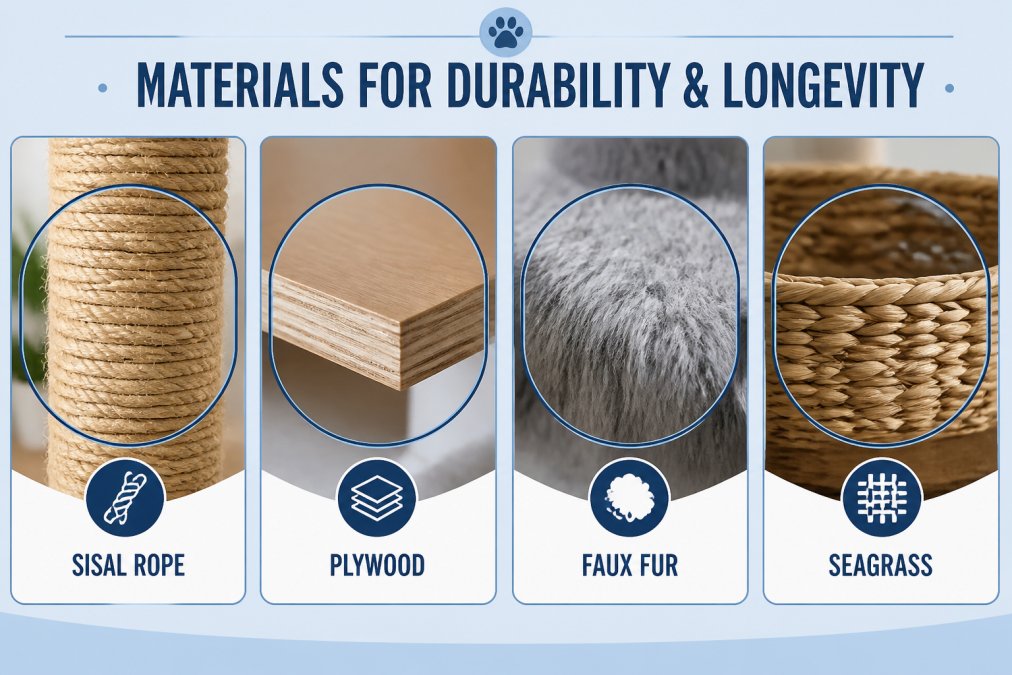
Sisal rope is the preferred scratching surface because it's durable, replaceable, and appeals to cats' natural scratching instincts. Carpet (Berber or standard) is comfortable for lounging but shows wear quickly and harbors odors. The best cat trees combine materials strategically: sisal for scratching posts, carpet for lounging platforms, enclosed spaces with soft linings for security.
Weight capacity correlates directly with material quality and base design. A tree rated for 50 pounds with a narrow base will wobble. A tree rated for 40 pounds with a wide, weighted base will feel solid. Always prioritize stability over stated capacity.
Longevity depends on replaceability. Premium options offer replacement carpet, sisal, and cushions. Budget options often require replacing the entire unit when surfaces wear. Over a 5-year lifespan, a $300 tree with $50 in replacements costs less than two $200 trees with no replacement options.
Space-Saving Design Features That Actually Work
True space-saving design isn't about making things smaller, it's about making them vertical and multi-functional. A cat tree that's 60 inches tall and 20 inches square uses less floor space than a cat bed that's 30 inches wide and 24 inches deep.
Wall-mounted shelves are the ultimate space-saver because they use wall space that would otherwise be empty. A single shelf takes up 12-18 inches of wall width and zero floor space. Multiple shelves create a climbing path without consuming any floor footprint.
Tension-mounted systems (floor-to-ceiling cat trees) use vertical space without wall mounting. They wedge between floor and ceiling using adjustable poles. These work in apartments where drilling is forbidden, but they occupy a full corner and limit furniture placement in that area.
Compact multi-level towers maximize vertical stacking. A 60-inch tree with a 24-inch square base provides multiple perches and lounging spots while occupying less floor space than a standard armchair. The key is footprint efficiency: the base should be no more than 25-30% of the tree's height.
Window-mounted options consume no floor or wall space, they use window sills that are typically empty. This is the most efficient space-saving solution if your apartment has appropriate windows.
Multi-Functional Cat Furniture: Combining Activities in Minimal Space
The best durable cat furniture for small spaces serves multiple purposes. A hideaway condo isn't just a hiding spot, it's also a scratching surface, a lounging area, and a territorial marker. A perch isn't just a vantage point, it's a scratching post, a jumping target, and a retreat.
Multi-level designs force efficiency. Each platform must accommodate lounging, climbing, or scratching. Integrated scratching surfaces matter. Cats need to scratch, it's non-negotiable. Furniture that doesn't address scratching becomes victim to your couch, curtains, and carpet.
Hideaway condos at the base provide security and territory. Cats in multi-cat households use enclosed spaces to escape conflict. Modular designs allow customization. A single shelf might be perfect for a young, active cat. Adding a second shelf two years later adapts the furniture to an aging cat who prefers lower perches.
Installation and Mounting Tips for Renters
Renter-friendly installation is possible without sacrificing durability or stability. The key is choosing the right mounting method for your specific apartment.
Suction-cup mounting (window sills, glass surfaces) requires clean glass and strong suction cups. Test the suction before committing your cat's weight to it. Suction cups degrade over time, so inspect monthly and replace if they lose grip.
Adhesive strips (command strips, velcro-style adhesive) work for lightweight furniture under 25 pounds. They leave no permanent marks if removed correctly, but they fail catastrophically if overloaded. Never use adhesive strips for furniture taller than 36 inches or heavier than 25 pounds.
Tension-mounted systems (floor-to-ceiling) use adjustable poles that wedge between floor and ceiling. They require no drilling and leave no marks. The trade-off: they occupy a full corner and only work in rooms with standard ceiling heights (8-10 feet).
For renters, the most practical approach is combining methods: a freestanding tower as the primary structure, with adhesive strips or wall anchors as backup stability measures.
Safety and Stability Requirements
A cat tree that wobbles or feels unstable won't be used, and worse, it can injure your cat. Stability is non-negotiable.
Base weight and footprint determine stability. A tree with a 20-inch square base needs a base weight of at least 15-20 pounds to prevent tipping when a 15-pound cat jumps from a high platform. The base should be at least 25-30% of the tree's height for safe stability.
Weight capacity ratings matter, but they're often optimistic. A tree rated for 50 pounds should feel stable with a 30-pound cat, not at its limit. Always choose a tree with a capacity 50% higher than your cat's weight.
Platform spacing affects safety. Platforms should be spaced 12-18 inches apart for comfortable jumping. Wider spacing requires longer jumps, increasing injury risk for senior or overweight cats.
Enclosed spaces (condos, hideaways) should have sturdy roofs that won't collapse if a cat lands on them. Scratching surfaces should be secure. Sisal rope that's loosely wrapped will unravel and become a strangulation hazard.
Regular inspection is part of ownership. Check for loose components, worn rope, or unstable joints monthly. Replace worn sisal rope and damaged cushions immediately.
Aesthetic Considerations for Apartments
In small apartments, cat furniture is always visible. Apartment furniture must coexist with your décor. This isn't vanity, it's practical. Furniture you hate looking at will frustrate you daily.
Design language matters. Modern minimalist apartments need sleek, narrow profiles and neutral colors. Traditional apartments can accommodate more ornate designs. Choose a tree that complements your existing aesthetic.
Color coordination extends furniture life aesthetically. A dark gray tree in a light apartment looks out of place after a year. A tree in a neutral tone (walnut, light oak, gray) works longer without feeling dated.
Material visibility affects daily satisfaction. Faux fur collects dust visibly. Berber carpet hides dust better. If you're particular about appearance, choose materials that hide wear and dust naturally.
The best furniture is the one you'll keep looking at without resentment. If a tree is beautiful but your cat ignores it, it's a failure. If a tree is functional but ugly, it's a daily eyesore. The sweet spot is functional and acceptable aesthetically.
Comparison Table: Durable Cat Furniture for Small Spaces
| Option | Height | Footprint | Price | Best For | Installation |
|---|---|---|---|---|---|
| Refined Feline Lotus Tower | 36 inches | 24×24 inches | $430-$460 | Design-conscious owners | Assembly required |
| K&H Kitty Sill EZ Window Mount | 8-10 inches | Window sill only | $36-$50 | Space-starved apartments | Suction cups, no tools |
| Catit Vesper V-Box Small | 24 inches | 24×24 inches | $103-$130 | Small cats, multi-function | Assembly required |
| On2Pets Cat Tree with Leaves | 60 inches | 20×20 inches | ~$200 | Natural aesthetics, climbers | No tools required |
| Armarkat Compact Condo | 30-36 inches | 20-24 inches | $65-$130 | Budget-conscious buyers | Assembly required |
Real-World Performance: What Owners Actually Report
Durable cat furniture for small spaces lives or dies based on actual use. A beautiful tree your cat ignores is expensive decoration. The most reliable furniture combines three elements: stability that feels solid, scratching surfaces that satisfy the scratching instinct, and hideaways that provide security.
Window-mounted beds consistently rank highest for actual usage. Cats use them daily for sunbathing and bird-watching. Compact multi-level trees see good usage if they're stable and include hideaways. Wall-mounted shelves show variable usage depending on placement and cat personality.
Freestanding towers with narrow bases (under 20-inch footprint) often develop wobble issues after 1-2 years with active cats. Owners report that the wobble discourages use, making the furniture less valuable over time. Wider bases maintain stability longer.
Material durability correlates with actual longevity. Sisal rope lasts 3-5 years with regular use. Carpet lasts 2-4 years before showing significant wear. Solid wood frames last 5+ years. Particleboard deteriorates within 2-3 years, especially in humid environments.
Maintenance and Repair: Extending Furniture Life
Durable cat furniture for small spaces should last years, not months. Maintenance extends life and keeps the furniture functional and hygienic.
Regular vacuuming removes dust, fur, and debris from carpet surfaces. Weekly vacuuming prevents odor accumulation and extends carpet life. Sisal rope doesn't require cleaning but does require inspection. Loose fibers become strangulation hazards. If rope starts unraveling, wrap the end tightly with tape or replace the rope entirely.
Cushions should be washed monthly if possible. Most quality furniture includes removable, machine-washable cushions. Air-dry cushions completely before reinstalling, moisture promotes mold and mildew.
Spot-cleaning for accidents (urine, vomit) should happen immediately. Use an enzyme-based pet cleaner designed for cat urine. Regular household cleaners don't break down urine compounds, leaving odor that attracts repeat accidents.
Structural inspection should happen quarterly. Check for loose bolts, wobbly joints, or unstable platforms. Tighten bolts, replace worn washers, and reinforce weak joints.
Replacement parts extend furniture life significantly. Premium brands offer replacement carpet, sisal rope, and cushions. Budget brands often don't, making replacement difficult or impossible.
The Bottom Line: Choosing Your Best Option
Durable cat furniture for small spaces requires balancing three competing needs: space efficiency, durability, and your cat's behavioral needs. No single option is perfect for every situation.
Choose wall-mounted shelves if you're a renter and your cat enjoys climbing and observation. The zero floor-space footprint and rental-friendly installation make this the most practical choice for constrained environments.
Choose window-mounted beds if your apartment has appropriate south- or west-facing windows. The consistent daily usage and behavioral benefits justify the minimal investment.
Choose compact multi-level towers (Refined Feline Lotus, Catit Vesper, or Armarkat models) if you want a freestanding solution that doesn't require installation. The stability and multi-functional design justify the slightly more floor space for most apartment dwellers.
Choose premium options (Refined Feline Lotus Tower) if you plan to keep the furniture 5+ years and prioritize aesthetics. The higher initial investment pays dividends in durability, replaceability, and design longevity.
Choose budget options (Armarkat, Frisco) if you're uncertain about long-term needs or expect to move frequently. The lower investment reduces financial risk, though you'll likely replace the furniture sooner.
The most important factor is stability. A wobbly tree, regardless of price or design, will frustrate you and be ignored by your cat. Always prioritize a wide base, heavy construction, and solid assembly over aesthetic appeal or feature count.
Choosing durable cat furniture for small spaces means accepting that perfection isn't possible. You're optimizing for multiple constraints: floor space, budget, installation limitations, and your cat's actual preferences. The best furniture is the one that balances these constraints without sacrificing stability or durability.
At Lola's Favorite Pet Gear, we understand that pet comfort shouldn't require sacrificing your living space. Our curated selection of high-quality pet essentials includes tools and accessories designed specifically for apartment living. From space-saving solutions to durable furniture components, we're committed to helping you create a cat-friendly home that works for both you and your feline companion. Discover how quality design and practical functionality can coexist, shop our collection today and transform your small space into a thriving environment for your cat.
Frequently Asked Questions
What materials make cat furniture most durable for small spaces?
Solid wood, engineered wood with E1-certified plywood, and sisal rope offer the best longevity. Sisal rope resists scratching better than carpet, while solid wood and plywood provide structural stability. Look for furniture with replaceable scratch pads and cushions, which extend the life of your piece. Avoid low-density particle board, which splinters under stress. Check product specifications for weight capacity and base stability, heavier furniture with a larger footprint stays secure longer.
Are wall-mounted cat trees better than floor models for small apartments?
Wall-mounted options free up floor space and are ideal for compact apartments. However, they require secure wall installation into studs and aren't always rental-friendly. Floor models offer flexibility, you can move them easily and don't need wall anchors. The best choice depends on your lease terms and how much floor space you can spare. Window-mounted shelves are a middle ground: they use vertical space without permanent wall damage, though they require clean window surfaces for suction cups to hold.
How do I install durable cat furniture in a rental apartment without losing my deposit?
Prioritize damage-free options: window-mounted beds use suction cups, tension-mounted shelves fit between floor and ceiling without drilling, and freestanding trees don't require anchoring. If you install wall shelves, use removable adhesive strips or command hooks rated for weight, or install into drywall anchors rather than studs. Always check your lease first. When you move, fill any small holes with spackling compound. Avoid permanent mounting unless your landlord approves it in writing.
What's the difference between weight capacity and footprint in cat furniture?
Weight capacity tells you how much your cat can weigh safely; footprint measures how much floor space the furniture occupies. A tall, narrow tree might have a small footprint but limited weight capacity, making it unstable for larger cats. A wider base distributes weight better and provides stability. For small spaces with multiple cats, prioritize a low-profile design with a wide, heavy base. Check the manufacturer's specs for both measurements, a 50-pound capacity with a 24-inch-wide base is more stable than a 50-pound capacity with a 12-inch base.
How do I match cat furniture to my apartment's decor style?
Modern apartments pair well with minimalist designs in neutral colors (white, gray, natural wood). Industrial spaces suit metal-framed shelves with sisal rope. Bohemian interiors work with natural materials like rattan and seagrass. Consider your wall color and existing furniture before choosing. Modular wall shelves let you customize layout and color, while compact trees in walnut or oak finishes blend into most spaces. Avoid bulky, multi-colored designs that clash with small-space décor. Many brands now offer furniture-grade finishes that look intentional rather than pet-specific.
This article was written using GrandRanker