

Table of Contents
- When Does Your Dog Actually Need Winter Apparel?
- How to Measure Your Dog for a Winter Coat
- Waterproof vs. Water-Resistant: What Your Dog Actually Needs
- Top Durable Dog Apparel for Winter: Product Comparison
- Best Dog Boots for Ice and Salt Protection
- Dog Breed Cold Tolerance Guide: Which Dogs Need Extra Protection
- Eco-Friendly and Sustainable Winter Apparel Options
- Maintenance and Care for Durable Winter Coats
Last Updated: August 9, 2026
When Does Your Dog Actually Need Winter Apparel?
Not every dog needs a winter coat. Breeds with thick double coats, Huskies, Malamutes, German Shepherds, have built-in insulation, while short-haired Chihuahuas need protection.

The real question depends on climate, breed, age, and activity level. Temperature alone doesn't determine need; humidity, wind chill, and outdoor duration all matter. Dogs with thin coats, senior dogs with reduced circulation, puppies still regulating body temperature, and dogs under 15 pounds are the clearest candidates.
Watch for behavioral signals. If your dog hesitates on walks, shivers noticeably, or seeks warmth constantly, cold is affecting comfort. Wet conditions change the equation, a water-resistant or waterproof outer shell becomes essential when snow is melting or rain is falling, since wet fur loses insulating value fast.
How to Measure Your Dog for a Winter Coat
Getting the fit right prevents weeks of returns. Start with the neck using a soft measuring tape around the base where a collar normally sits, with one finger of space underneath. Next, measure the back length from the base of the neck where it meets the shoulders along the spine to the base of the tail. Measure girth around the widest part of the chest, just behind the front legs, with two fingers of space for comfortable breathing.
Check the product's sizing chart against your measurements, not your dog's age or weight. Two 40-pound dogs can have completely different builds.
Waterproof vs. Water-Resistant: What Your Dog Actually Needs
Water-resistant means the material resists water penetration for a limited time under light conditions. Waterproof means water won't penetrate even under sustained contact or pressure.
For most winter conditions in the US, water-resistant is sufficient. Light snow, frost, and brief sleet exposure won't saturate a quality water-resistant outer shell. Waterproof becomes essential if your dog regularly swims, plays in heavy rain, or walks through slush and melting snow. The tradeoff: waterproof materials are often heavier and less breathable.
Construction matters as much as material. A water-resistant jacket with sealed seams outperforms a waterproof coat with unsealed seams. Look for fully taped or sealed seams, especially along the back and sides.
Consider your dog's activity level. An active dog generates body heat and moisture from exertion; a waterproof coating can create a clammy environment. A water-resistant coat with breathable insulation lets moisture escape while keeping rain out. A senior dog benefits more from full waterproof protection.
Top Durable Dog Apparel for Winter: Product Comparison
| Product | Price | Best For | Key Features | Material |
|---|---|---|---|---|
| Waterproof Dog Harness Jacket | $60.99 | All-day outdoor use | Built-in harness, waterproof shell, thermal insulation | Waterproof outer, fleece lining |
| Fleece Padded Dog Harness Coat | $63.99 | Cold weather + control | Fleece padding, integrated harness, hooded design | Fleece, imitation fur trim |
| Warm Fur Pet Winter Coat | $56.99 | Everyday winter wear | Soft cotton blend, full coverage, lightweight | Cotton blend, waterproof |
| Striped Dog Hoodie Winter Outfit | $56.99 | Mild winter days | Stylish design, soft fabric, comfortable fit | Cotton blend, cozy fabric |
| Hurtta Extreme Warmer III ECO | $81.99 | Extreme cold climates | Foil-lined heat reflection, recycled materials, taped seams | Recycled polyester, foil lining |
| Canada Pooch North Pole Parka | $57.99 | Maximum warmth | Faux-down insulation, fleece lining, machine washable | Waterproof polyester, faux-down |
| Ruffwear Summit Trex Dog Boots | $29.99 (pair) | Paw protection | Weather-resistant ripstop, non-marking sole, reflective trim | Polyester ripstop, rubber |
1. Waterproof Dog Harness Jacket, Best for Multi-Purpose Winter Protection
The Waterproof Dog Harness Jacket integrates control and warmth into a single piece, eliminating friction where harnesses rub against coats. The waterproof outer shell handles wet conditions without bulk, while thermal insulation keeps core body heat intact. The integrated harness has attachment points that don't interfere with movement, and you can clip a leash directly without adding layers.

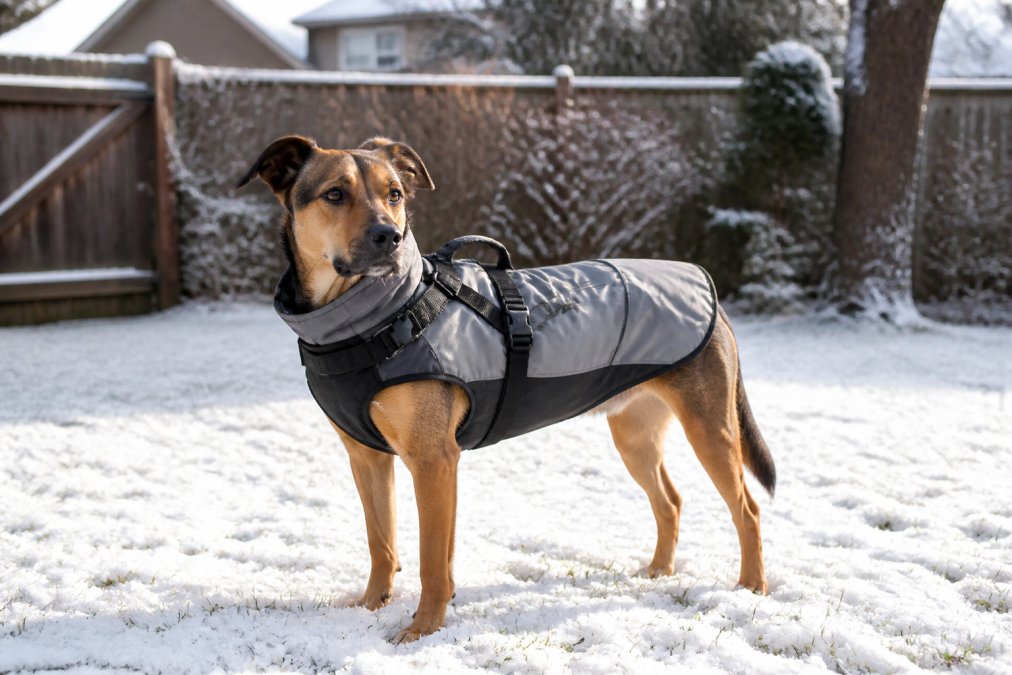
At $60.99, this sits in the mid-range for integrated solutions. Durability comes from reinforced stitching around harness attachment points, which experience the most stress during active use.
2. Fleece Padded Dog Harness Coat, Best for Cold Weather Control
The Fleece Padded Dog Harness Coat adds a hooded design that many dogs appreciate. The hood sits over the head without restricting vision or ears, and imitation fur trim provides wind protection around the face. Fleece padding delivers warmth without the weight of down, dries faster if wet, and resists matting over time.
At $63.99, this is slightly more expensive than the waterproof version, primarily because of the hooded design. For dogs spending 30-60 minutes outside in cold weather, the hood makes a real difference.
3. Warm Fur Pet Winter Coat, Best for Everyday Winter Wear
The Warm Fur Pet Winter Coat is the entry point for dogs needing reliable protection without premium pricing. At $56.99, it delivers waterproof protection and thermal insulation. The soft cotton blend exterior is comfortable against skin, and the waterproof layer handles snow and light rain. Machine washability is a real advantage; you can throw it in a gentle cycle with cold water.
4. Striped Dog Hoodie Winter Outfit, Best for Mild Winter Days
The Striped Dog Hoodie Winter Outfit prioritizes style without sacrificing function. At $56.99, the hoodie design is less structured than traditional coats, which some dogs prefer. It doesn't have rigid panels or heavy hardware, so it feels lighter and less restrictive. For dogs with anxiety around gear or sensitivity to pressure, this design can be more acceptable.
This is the right choice for mild winter climates or brief outdoor time. The cozy fabric is soft but less durable than heavier materials, fine for occasional use but may show wear faster if worn daily.
5. Hurtta Extreme Warmer III ECO, Best for Extreme Cold and Eco-Conscious Owners
The Hurtta Extreme Warmer III ECO is the premium option for genuinely cold climates. At $81.99, it's engineered for temperatures well below freezing. The foil lining reflects your dog's body heat back inward, creating a thermal pocket significantly warmer than conventional insulation. Fully taped seams prevent water infiltration in wet snow.
6. Canada Pooch North Pole Parka, Best for Faux-Down Warmth
The Canada Pooch North Pole Parka ($57.99) delivers warmth comparable to down insulation without maintenance issues. Faux-down is lighter than synthetic polyfill, compresses well for storage, and retains warmth even when damp. The ultra-soft fleece lining is more comfortable against sensitive skin. The button snap for the hood keeps it secured during active play.
The limitation: sleeves are only available in smaller sizes. Larger dogs get a sleeveless design, meaning front legs have less coverage.
Best Dog Boots for Ice and Salt Protection
Winter boots protect paws from ice, snow, salt, and chemical de-icers that burn paw pads. Salt and chemical de-icers are caustic and irritating, causing redness, cracking, and pain. Dogs lick their paws to soothe irritation, ingesting salt and chemicals in the process. Boots eliminate contact entirely.
Ice buildup between paw pads creates discomfort and restricts movement. Some dogs develop a hopping gait trying to shake off ice. Boots with good coverage prevent this packing.
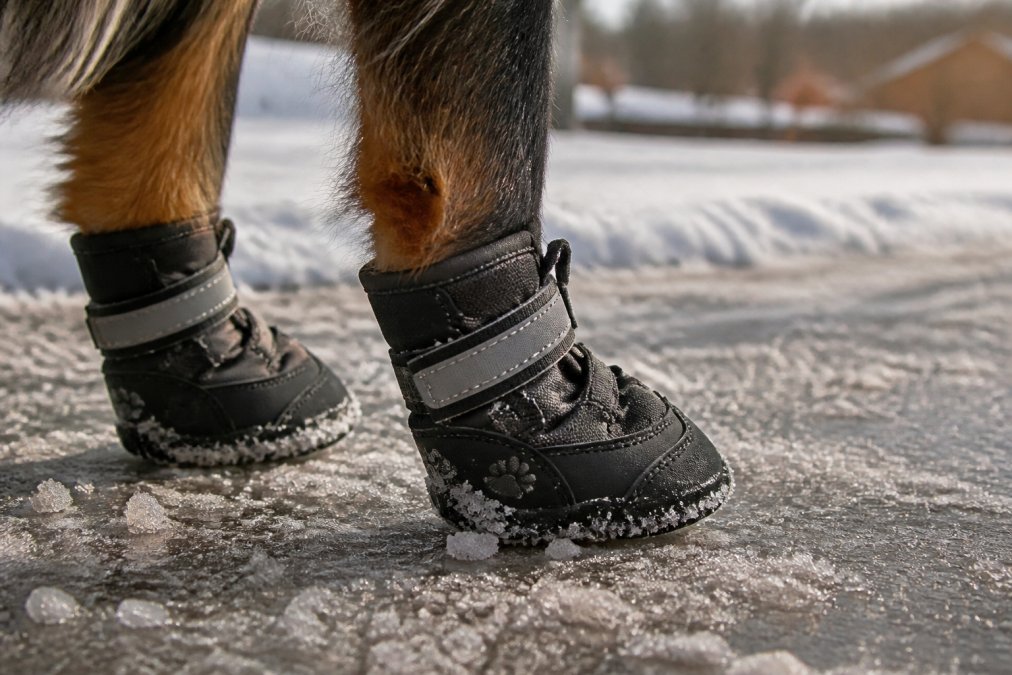
The Ruffwear Summit Trex Dog Boots ($29.99 per pair) are the standard choice for paw protection. The weather-resistant ripstop upper blocks moisture and debris. The non-marking rubber sole provides traction on ice without leaving marks on indoor floors. The wide opening and hook-and-loop closure make them easy to put on and remove. The reflective trim improves visibility during early morning or evening walks.
Many dogs need a few walks to adjust to boots. Start with short walks and gradually increase duration. Most dogs accept boots within three to five walks.
Dog Breed Cold Tolerance Guide: Which Dogs Need Extra Protection
Breed matters more than size when determining cold tolerance. A 30-pound thin-coated dog needs more protection than a 50-pound thick-coated dog.
High cold tolerance (minimal protection needed): Huskies, Malamutes, Saint Bernards, Newfoundlands, and Bernese Mountain Dogs have double coats evolved for extreme cold. They rarely need coats except in extreme conditions (below 0 degrees Fahrenheit). Puppies and seniors in these breeds may benefit from protection because they don't yet have full coats or their circulation is compromised.
Moderate cold tolerance (protection recommended in cold climates): German Shepherds, Golden Retrievers, Labrador Retrievers, and similar medium-to-large coated breeds handle cold reasonably well but benefit from protection in sustained cold below 20 degrees Fahrenheit. A light coat or water-resistant shell adds comfort during extended outdoor time.
Low cold tolerance (protection essential in winter): Short-haired breeds like Chihuahuas, Greyhounds, Boxers, Pit Bulls, and Weimaraners have minimal insulation. These dogs need protection whenever temperature drops below 45 degrees Fahrenheit. Small breeds lose body heat faster than large breeds.
Age and health modify breed tolerance: Puppies don't have full coats until 6-12 months old, so they need protection earlier in the season. Senior dogs (over 7-8 years) experience reduced circulation and less efficient temperature regulation. Dogs with health conditions benefit from extra protection because metabolic resources are already stretched.
Eco-Friendly and Sustainable Winter Apparel Options
Sustainable dog apparel is no longer niche. Several manufacturers offer winter coats made from recycled materials, organic fabrics, and durable construction designed to last through multiple dogs or seasons.
The Hurtta Extreme Warmer III ECO uses recycled polyester instead of virgin plastic. Gold Paw Series Stretch Fleece uses recycled-content stretch fleece, ideal as a base layer or for mild winter conditions. Carhartt Dog Chore Coat uses 100% ring-spun cotton duck canvas, a natural fiber that's biodegradable at end of life.
Look for these markers of sustainable apparel: recycled content, natural fibers, durable construction rated for multiple seasons, reputable manufacturer with transparent sourcing, and design allowing for repair or resale. A coat lasting five years is more sustainable than one lasting two years, even if initial materials are less eco-friendly.
The price premium for eco-friendly options is typically 10-20% higher than conventional coats. Over the coat's lifetime, cost-per-wear often comes out lower because durability is higher.
Maintenance and Care for Durable Winter Coats
How you care for a winter coat determines how long it lasts. A $60 coat lasting three years costs $20 per year; the same coat deteriorating after 18 months costs $40 per year.
Regular cleaning: Remove dirt and salt after each walk with a damp cloth or soft brush. This prevents salt from corroding stitching or weakening waterproof coating. For heavily soiled coats, rinse gently with cool water and air dry.
Machine washing: Check manufacturer's instructions. Most modern winter coats are machine washable on a gentle cycle with cold water. Use mild detergent; harsh soaps strip waterproofing. Wash inside out to protect the exterior finish. Air dry completely before storing.
Hand washing: For premium coats with special linings or taped seams, hand washing is safer. Soak in cool water with mild detergent for 10-15 minutes, gently agitate, rinse thoroughly, and air dry.
Storage: Clean and completely dry the coat before storing. Store in a cool, dry place away from direct sunlight. Don't compress heavily; let it hang or lay flat to preserve insulation loft.
Seam and zipper maintenance: Check seams and zippers periodically for damage. Small tears can be sealed with seam sealer before becoming major problems. Stuck zippers can be freed with graphite powder or silicone spray.
Waterproof coating refresh: After several seasons, the waterproof coating may degrade. Most coats can be retreated with fabric waterproof spray, extending the coat's life by another season or two.
Repair vs. replace: Small rips, broken snaps, and torn seams are repairable by a tailor or gear repair specialist for $10-30. Large tears, compromised insulation, or broken hardware that can't be sourced are signs it's time to replace.
Choosing durable dog apparel for winter comes down to matching your dog's breed, climate, and activity level to the right gear. The Waterproof Dog Harness Jacket and Fleece Padded Dog Harness Coat from Lola's Favorite Pet Gear offer integrated control and warmth at accessible prices. For extreme cold or eco-conscious owners, the Hurtta Extreme Warmer III ECO delivers durability and sustainability. Boots protect paws from salt and ice damage. Proper maintenance extends any coat's lifespan significantly. Start with honest assessment of your dog's needs, invest in quality construction, and your dog will stay comfortable through winter.

Frequently Asked Questions
How do I know if my dog needs a winter coat?
Dogs with short coats, small breeds, seniors, and those with low body fat need winter protection. If your dog shivers, hesitates to go outside, or seeks warmth indoors, a durable dog apparel for winter is essential. Breeds like Chihuahuas, Greyhounds, and Boxers struggle in cold. Check your local temperature, below 45°F typically warrants a coat for most dogs.
What's the difference between waterproof and water-resistant dog coats?
Waterproof coats have fully sealed seams and block water completely, ideal for wet snow and rain. Water-resistant coats repel light moisture but aren't fully waterproof. For harsh winters with sleet or frequent wet conditions, waterproof is better. Water-resistant works for dry cold or light precipitation. Check the outer shell material, ripstop nylon and heavy duck canvas offer better durability.
How do I measure my dog for a winter coat?
Measure your dog's neck, chest (widest part), back length (shoulder to tail base), and belly circumference using a soft tape measure. Keep one finger's space for comfort. Compare measurements to the brand's size chart, sizing varies between manufacturers. For oddly-shaped dogs, order from brands offering detailed fit guides or flexible return policies to ensure the coat doesn't restrict movement or leave gaps.
Are dog boots necessary for winter, or just a nice-to-have?
Dog boots protect paws from ice, salt, and chemical de-icers that damage paw pads and cause irritation. They're essential if you live where roads are salted or temperatures drop below 20°F. Boots also improve traction on ice, preventing slips. If your dog walks on treated sidewalks or spends extended time outside, boots are a practical addition to a winter coat for complete protection.
What makes a dog winter coat actually durable?
Durability comes from strong outer fabrics (1200-denier ripstop or heavy duck canvas), reinforced seams, quality hardware (rivets and buckles), and proper insulation. Check for taped seams, which prevent water seeping through stitching. Read customer reviews mentioning longevity after multiple seasons. Lola's Favorite Pet Gear coats feature durable stitching and weather-resistant shells designed to withstand repeated washing and outdoor wear.
This article was written using GrandRanker