

Table of Contents
- Why Durable Dog Beds Matter for Aggressive Chewers
- Destructive Behavior vs. Anxiety-Based Chewing: Understanding Your Dog's Needs
- Chew Proof Dog Beds: What Makes Them Truly Resistant
-
Dog Beds for Aggressive Chewers: Top Alternatives to Laylo Pets
- K9 Ballistics Chew Proof Armored Rip-Stop Elevated Dog Bed
- Bully Beds Chew Resistant Dog Bed with Kevlar Reinforcement
- Kuranda All-Aluminum Dog Bed for Maximum Durability
- Gorilla Dog Beds Ballistic Tough Orthopedic Option
- Orvis ToughChew Couch Dog Bed with Memory Foam
- Carhartt Durable Canvas Dog Bed for Rugged Style
- Dog Bed Materials Durability: Comparing Fabric and Construction Standards
- Washable Durable Dog Beds: Easy Maintenance Without Sacrificing Strength
- Repairability and Replacement Parts: Extending Bed Longevity
- Comparison Table: Durable Dog Beds at a Glance
Durable Dog Beds: Top Alternatives to Laylo Pets
Last Updated: July 31, 2026
When aggressive chewers destroy their bedding within weeks, pet owners face a frustrating cycle of replacement costs and wasted money. Finding a laylo pets alternative for durable beds that actually withstands destructive behavior requires understanding what separates marketing claims from real-world performance. At Lola's Favorite Pet Gear, we've analyzed the materials, construction standards, and real-world durability of dozens of dog beds designed for heavy chewers, and the results reveal significant differences in longevity and value.
The difference between a bed that lasts three months and one that lasts three years comes down to fabric denier, seam construction, foam density, and whether the design prevents access to vulnerable areas.
Why Durable Dog Beds Matter for Aggressive Chewers
A destroyed dog bed isn't just an inconvenience, it's a safety hazard. When dogs tear through standard bedding, they ingest foam, fabric fibers, and stuffing that can cause intestinal blockages requiring emergency surgery. Replacing bedding every few weeks adds up to hundreds of dollars annually.

Dogs that destroy beds fall into two behavioral categories: some chew from anxiety or boredom; others have an instinctive drive to nest and dig. Understanding which category your dog falls into determines which laylo pets alternative for durable beds will actually solve the problem.
A high-quality durable dog bed reduces stress for both owner and pet. When your dog has a bed they can't destroy, they settle faster, sleep longer, and experience less anxiety about their sleeping space.
Destructive Behavior vs. Anxiety-Based Chewing: Understanding Your Dog's Needs
Your dog's destructive behavior falls into one of two categories. Anxiety-based chewing occurs when dogs are stressed, bored, or left alone; they chew to self-soothe or burn nervous energy. Destructive nesting behavior is driven by instinct; the dog tears, digs, and shreds to create a nest or burrow.
Anxiety-based chewers often focus on seams, edges, and zippers, working methodically at one spot until they break through. These dogs typically respond well to elevated beds with minimal soft edges.
Dogs with nesting drives attack the entire bed simultaneously, tearing into the foam, digging at the bottom, and shredding the cover from multiple angles. These dogs need beds where the fabric is encased in a frame so teeth can't access the filling, or where the outer material is so dense that penetration is nearly impossible.
Watch your dog's behavior for a week. Does he focus on one area, or attack the whole bed? Does he chew more when you leave, or constantly throughout the day? These observations directly inform which laylo pets alternative for durable beds will work.
Chew Proof Dog Beds: What Makes Them Truly Resistant
The term "chew-proof" is marketing language. No bed is literally impossible to destroy if a dog is determined enough. What matters is resistance, how long a bed takes to destroy and whether it can be repaired.
A genuinely resistant chew proof dog bed uses one or more of these strategies: encasing the filling in a frame so teeth can't access it, using fabric so densely woven that teeth can't penetrate it, or combining high-denier material with reinforced seams so tearing requires sustained effort over weeks rather than hours.
The most common mistake is confusing soft, plush fabric with durability. Real durability feels rough, tight, and dense, qualities that don't feel luxurious to human hands but that resist dog teeth effectively.
Material Science Behind Chew Resistance
Denier measures fabric thickness and weight. For aggressive chewers, you want fabric in the 600-1200 denier range at minimum. Anything below 400 denier tears too easily.
Ballistic nylon and ripstop materials are industry standards for chew resistance. Ballistic nylon is a tightly woven polyester originally developed for military gear. Ripstop contains reinforcing threads woven in a grid pattern that prevents tears from spreading. Both materials resist puncture and tearing significantly better than standard polyester or cotton blends.
Waterproof liners protect the foam inside from moisture and accidents. A good waterproof liner is typically vinyl or polyurethane-coated fabric, creating a barrier between the dog's teeth and the filling while preventing urine from reaching the foam.
Testing Protocols for Tough Beds
Legitimate manufacturers test their beds against aggressive chewing using mechanical devices that apply consistent pressure and movement. Some manufacturers offer "chew guarantees" backed by actual testing data. K9 Ballistics provides a 120-day chew-proof warranty with specific conditions. Kuranda uses a patented encasement design where fabric is sandwiched between the aluminum frame, making it physically impossible for teeth to reach the filling. When evaluating a bed's durability claims, look for specific testing details rather than vague promises.
Dog Beds for Aggressive Chewers: Top Alternatives to Laylo Pets
The following beds represent the best laylo pets alternative for durable beds options currently available, each addressing different needs and budgets.
K9 Ballistics Chew Proof Armored Rip-Stop Elevated Dog Bed
K9 Ballistics specializes exclusively in beds for aggressive chewers. This elevated bed uses ballistic rip-stop fabric stretched over an aluminum frame, creating a design where the fabric is the primary barrier against teeth. The elevated design keeps the dog off cold floors and improves air circulation for cooling.
The frame is aluminum with reinforced corners, and the fabric is a proprietary ballistic material rated for extreme durability. The bed comes in five sizes and includes a 120-day chew-proof warranty for dogs under 100 pounds. Setup takes about 15 minutes with no tools required.

The primary limitation is comfort. This bed doesn't offer orthopedic memory foam or plush cushioning; it's essentially fabric stretched over a frame.
Best for: Extreme chewers and dogs who benefit from elevated sleeping surfaces. The 120-day warranty gives you a risk-free trial period.
Bully Beds Chew Resistant Dog Bed with Kevlar Reinforcement
Bully Beds combines orthopedic support with aggressive-chewer durability. The bed uses CertiPUR-US certified memory foam paired with a proprietary BullyTuf™ cover and Kevlar-reinforced seams.
The Kevlar reinforcement is the standout feature. Kevlar is used in body armor; it's one of the toughest materials available. Seams are triple-stitched with Kevlar thread, making them nearly impossible to tear through. The bed includes a 20-year warranty against foam flattening, and the cover is machine-washable.
The trade-off is price. Bully Beds costs significantly more than basic alternatives, starting around $150 for small sizes and exceeding $300 for large beds. For owners committed to investing in a long-term solution, the cost-per-year over 5-10 years becomes reasonable.
Best for: Dogs needing both orthopedic support and extreme chew resistance. Owners who view bedding as a long-term investment.
Kuranda All-Aluminum Dog Bed for Maximum Durability
Kuranda uses a patented design where the fabric is sandwiched between an aluminum frame and a support rail, making it physically impossible for teeth to reach the filling. This approach has been proven in shelters and kennels for decades.
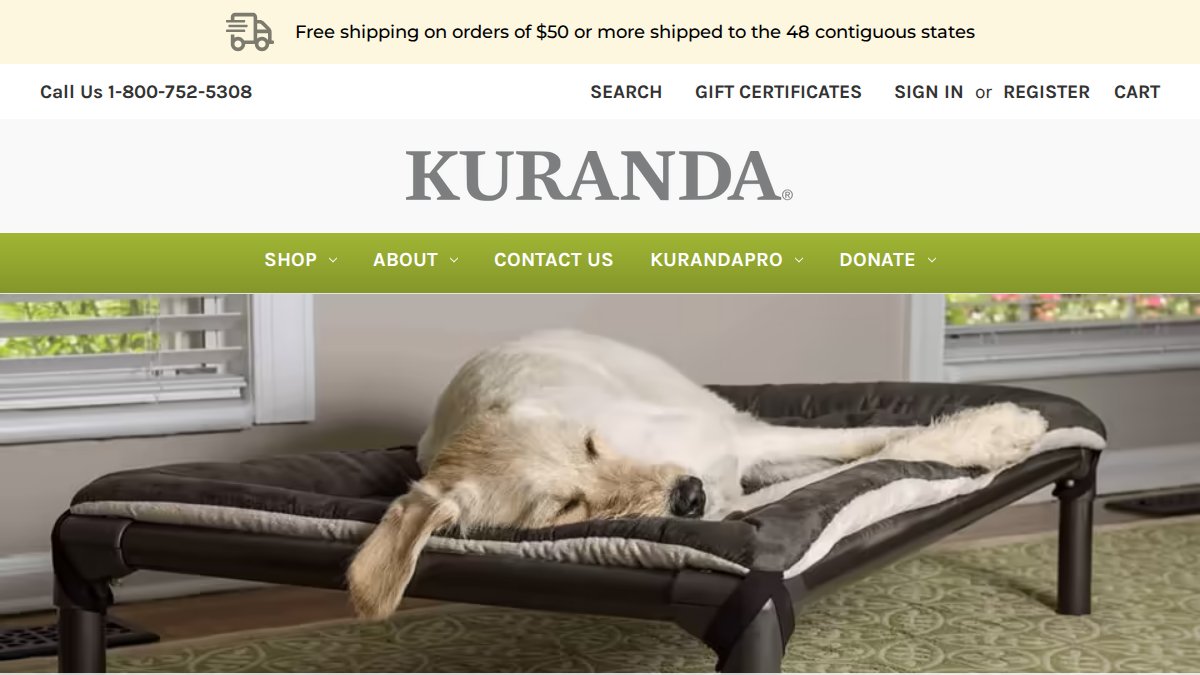
The bed comes in aluminum or stainless steel frames with fabric options in vinyl or Cordura (a high-denier nylon). The elevated design provides orthopedic support from the raised position and allows air circulation underneath for cooling. The bed is easy to clean and sanitize.
The primary drawback is comfort. This is a functional bed rather than a luxurious one. The fabric is taut and firm, not plush. The higher price point (starting around $160) reflects the industrial-grade construction.
Best for: Multi-dog households, kennels, shelters, and owners prioritizing durability above all else.
Gorilla Dog Beds Ballistic Tough Orthopedic Option
Gorilla Dog Beds positions itself between budget options and premium alternatives. The bed uses triple-stitched seams, puncture-resistant exterior fabric, and dense fibers throughout. Orthopedic memory foam provides joint support without sacrificing durability.
The construction emphasizes seam strength, where most beds fail first. Gorilla reinforces seams with triple stitching and uses high-denier fabric that resists puncture across the entire surface.
Pricing ranges from $91.00 to $393.00 depending on size, making it one of the more affordable options that combines durability with orthopedic support.
Best for: Budget-conscious owners seeking a balance between durability and comfort. Dogs needing orthopedic support but not extreme chewing resistance.
Orvis ToughChew Couch Dog Bed with Memory Foam
Orvis has applied its outdoor gear durability expertise to dog beds. The ToughChew uses a double-layer ripstop nylon cover with bolstered sides and either memory foam or eco-friendly fill options. Orvis guarantees the bed against chewing and will refund or replace it if the dog tears through the cover.

The double-layer ripstop design provides redundancy. Even if the dog penetrates the outer layer, the inner layer provides additional protection. The bolstered sides offer neck support and create a cozy nest-like feel.
The catch is price. Orvis ToughChew beds range from $216.75 to $291.75, making them one of the most expensive options.
Best for: Dogs who want comfort and support alongside chew resistance. Owners willing to invest in premium bedding.
Carhartt Durable Canvas Dog Bed for Rugged Style
Carhartt applies its workwear durability expertise to dog bedding. The bed uses 12-ounce 100% cotton duck canvas with a water-repellent finish, a removable and machine-washable cover, and a hidden YKK zipper.

Cotton duck canvas is significantly more durable than standard polyester. It resists tearing and puncture better than lighter fabrics, though it doesn't match the performance of ballistic nylon or ripstop. The water-repellent finish protects against accidents and spills without a separate waterproof liner.
The aesthetic is distinctly rugged. The canvas doesn't offer orthopedic support, so it's better suited for younger dogs or those without joint issues. Pricing ranges from $109.99 to $139.99.
Best for: Active dog owners who appreciate workwear aesthetics. Dogs without significant joint issues who need a durable, washable bed.
Dog Bed Materials Durability: Comparing Fabric and Construction Standards
The fabric you choose determines how long a bed lasts and how well it resists chewing.
High-Denier Fabrics and Tear Resistance
Denier measures the weight of fabric fibers. A higher denier means thicker, heavier fibers packed more densely. For perspective:
- 100-200 denier: lightweight, tears easily, typical of budget bedding
- 300-500 denier: moderate durability, acceptable for light chewers
- 600-900 denier: good durability, suitable for moderate to heavy chewers
- 1000+ denier: extreme durability, designed for aggressive chewers
High-denier fabrics feel stiff and coarse compared to soft fleece or microsuede. This stiffness is intentional, it makes penetration by teeth more difficult.
Ballistic nylon and ripstop are the gold standards for chew resistance. Ballistic nylon is a tightly woven polyester originally developed for military equipment. Ripstop contains reinforcing threads in a grid pattern that prevents tears from spreading.
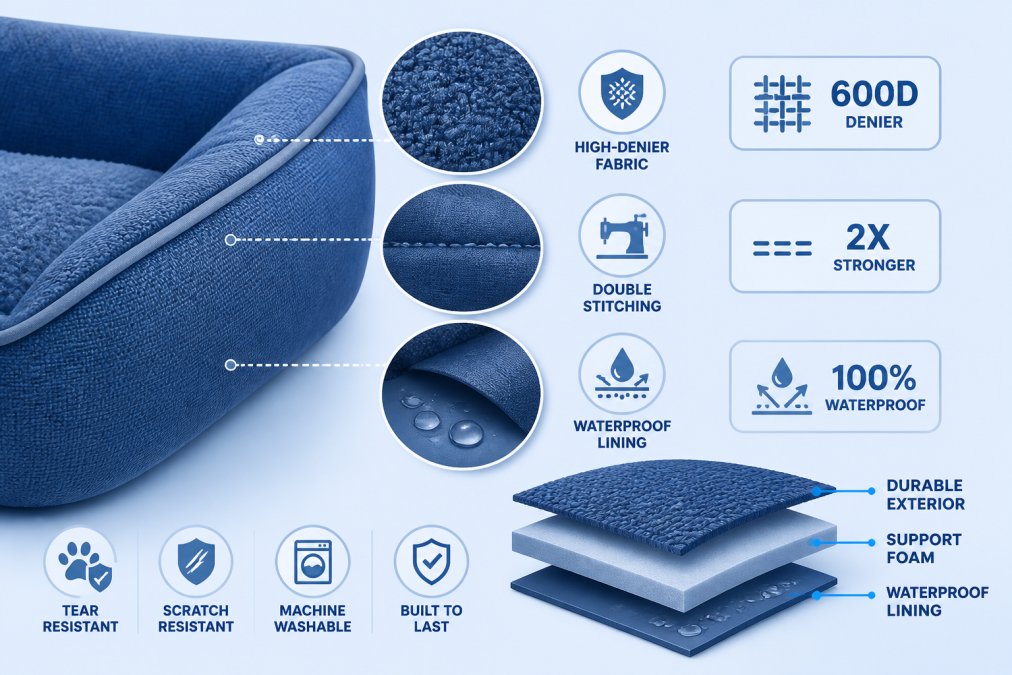
Standard polyester blends and cotton tear more easily. Canvas and heavy cotton duck are durable but don't match the tear resistance of ballistic nylon.
Orthopedic Memory Foam and Pressure Relief
Memory foam density determines support and durability. Density is measured in pounds per cubic foot (PCF). Standard foam is 1.5-2 PCF; orthopedic memory foam is typically 3-5 PCF. Higher density means the foam is more compressed and durable.
CertiPUR-US certification indicates the foam meets standards for durability, low chemical emissions, and performance. Certified foam is tested for resistance to flattening, tear strength, and off-gassing. For aggressive chewers, foam density matters less than cover durability, but for dogs with joint issues who also chew, you need both: a tough cover paired with high-density orthopedic foam.
CertiPUR-US Certification and Non-Toxic Standards
CertiPUR-US certification means the foam has been independently tested and meets standards for low VOC emissions, no ozone-depleting chemicals, resistance to flattening, and tear strength. Non-toxic foam is important for dogs who spend hours sleeping on the bed. When evaluating a bed, look for explicit CertiPUR-US labeling rather than vague claims like "high-quality foam."
Washable Durable Dog Beds: Easy Maintenance Without Sacrificing Strength
A durable bed is only useful if you can keep it clean. The best washable durable dog beds combine tough fabrics with removable, machine-washable covers.
Removable Covers and Machine-Washable Options
A removable cover allows you to wash the fabric without removing the foam. Most quality beds have zippers that allow cover removal. Machine-washable covers are essential for owners with frequent accidents, muddy dogs, or multiple pets.
Washing a cover requires cold water and gentle cycle to prevent damage. Hot water and high-heat dryers can degrade the fabric and waterproof coatings. Not all durable fabrics are machine-washable. Ballistic nylon and ripstop can handle gentle machine washing, but some proprietary materials require hand washing. Check the care instructions before purchasing.
Waterproof Liners and Accident Protection
A waterproof liner prevents urine from reaching the foam, which prevents odor and mold growth. The liner is typically a layer of vinyl or polyurethane-coated fabric sewn into the bed between the cover and foam.
Without a waterproof liner, urine soaks into the foam, and even machine washing the cover won't eliminate the smell. For dogs with incontinence or young puppies in training, a waterproof liner is non-negotiable. Quality waterproof liners are sealed at all seams.
Repairability and Replacement Parts: Extending Bed Longevity
The most durable beds are ones you can repair rather than replace. When a seam tears or a zipper fails, the ability to replace that component extends the bed's lifespan significantly.
Some manufacturers offer replacement covers separately. K9 Ballistics, for example, sells replacement fabric panels and covers, allowing you to refresh a bed that's still structurally sound. Bully Beds offers replacement covers for the same reason.
Zipper quality matters more than most people realize. Quality beds use YKK zippers (a Japanese manufacturer known for durability) or other industrial-grade zippers. Seam construction determines repairability. Triple-stitched seams are easier to repair than single-stitch seams because there's redundancy.
Comparison Table: Durable Dog Beds at a Glance
| Bed | Starting Price | Best For | Key Strength | Key Limitation |
|---|---|---|---|---|
| K9 Ballistics Rip-Stop | $120 | Extreme chewers | 120-day chew warranty | No orthopedic support |
| Bully Beds Kevlar | $159.99 | Chewers needing support | Kevlar seams + memory foam | High price point |
| Kuranda Aluminum | $160 | Multi-dog households | Patented frame design | Minimal comfort/softness |
| Gorilla Dog Beds | $91.00 | Budget + durability balance | Triple-stitched seams | Moderate chew resistance |
| Orvis ToughChew | $216.75 | Premium comfort + durability | Double-layer ripstop | Expensive for most budgets |
| Carhartt Canvas | $109.99 | Rustic aesthetic preference | Water-repellent finish | No orthopedic support |
Choosing the right laylo pets alternative for durable beds requires matching your dog's specific destructive behavior to the bed's design. An aggressive chewer needs a bed with encased fabric or extremely high-denier material; a dog with anxiety needs a bed that removes tempting seams and zippers. The best beds combine durable materials with repairability, so when damage occurs, you can replace components rather than the entire bed.
Lola's Favorite Pet Gear's Calming Donut Bed for Dogs & Cats ($111.99) offers a middle-ground option with a supportive design and quality construction, suitable for dogs who chew moderately but need comfort alongside durability. For owners ready to invest in a long-term solution, the alternatives outlined above, particularly Bully Beds and K9 Ballistics, deliver measurable durability that justifies the cost over years of use.
Start by observing your dog's chewing pattern for a week. Does he focus on seams, or attack the entire bed? Once you understand the behavior, you can select a bed engineered specifically for that pattern rather than guessing and replacing bedding repeatedly.
Frequently Asked Questions
What makes a dog bed truly chew-proof for aggressive chewers?
Chew-proof dog beds combine multiple durability features: high-denier ballistic or ripstop fabrics (often 1000+ denier), Kevlar-reinforced seams, heavy-duty stitching with triple or more passes, and puncture-resistant exteriors. Materials like those used in K9 Ballistics and Bully Beds employ aerospace-grade construction. The key is that the fabric itself resists puncture, and the seams are reinforced so chewing pressure cannot create weak points. Testing protocols for tough beds typically involve sustained pressure and bite-simulation tests to verify the bed withstands aggressive chewing patterns.
Are durable dog beds also orthopedically supportive for older dogs?
Many durable dog beds offer both features. Options like Gorilla Dog Beds and Orvis ToughChew include orthopedic memory foam or high-density foam cores that provide joint support and pressure relief, while maintaining chew resistance through reinforced covers. However, some ultra-durable beds like Kuranda's aluminum frame prioritize durability over plush comfort. When selecting a durable dog bed for a senior dog, look for CertiPUR-US certified memory foam, adequate thickness (4-5 inches), and bolstered sides for neck and spine alignment.
How do washable durable dog beds maintain strength after repeated cleaning?
Washable durable dog beds use removable covers made from high-denier fabrics that withstand machine washing without degrading. Waterproof liners protect the foam core from moisture damage, preventing mildew and extending longevity. Quality options like Carhartt's canvas beds and Brindle's memory foam beds feature machine-washable covers rated for frequent laundering. The key is that the cover's durability comes from the fabric weave and thread count, not adhesives, so washing does not compromise chew resistance or structural integrity.
What's the difference between destructive chewing and anxiety-based chewing when choosing a bed?
Destructive chewing is typically curiosity-driven or habit-based in puppies and young dogs, while anxiety-based chewing stems from stress, separation anxiety, or boredom. For destructive chewers, a chew-proof bed with reinforced seams and high-denier fabric is essential. For anxiety-based chewing, a calming bed with bolstered sides (like a donut design) combined with a durable cover addresses both comfort and durability. Understanding your dog's chewing trigger helps you select a bed that solves the root problem, a chew-proof bed alone won't stop anxiety-driven behavior without addressing the underlying stress.
How do I know if a durable dog bed will actually last compared to standard options?
Look for beds with warranties against chewing or flattening (Bully Beds offers 20 years against foam flattening; Orvis guarantees against chewing damage). Check material specifications: high-denier fabrics (1000+ denier), triple-stitched seams, and CertiPUR-US certified foam indicate quality. Read customer reviews specifically about longevity and chew resistance. Compare cost-per-year: a $200 bed lasting 5+ years may be more economical than a $50 bed replaced annually. Brands like K9 Ballistics and Kuranda are commonly used in shelters and kennels, signaling extreme durability under high-stress conditions.
This article was written using GrandRanker