

Table of Contents
- What to Look for in a Durable Leash for Strong Pullers
- How to Stop a Dog from Pulling on the Leash
- Best Harness for Dogs That Pull
- Top Durable Leashes for Strong Pullers: Comparison Table
- 1. LED Retractable Dog Leash: Safety Meets Durability
- Breed-Specific Recommendations and Sizing
- Safety Features That Matter: Reflective Stitching and Shock-Absorbing Technology
- Conclusion
Last Updated: August 13, 2026
What to Look for in a Durable Leash for Strong Pullers
When your dog pulls with force, a standard leash won't cut it. You need equipment engineered to handle sustained tension without fraying, snapping, or failing mid-walk. The foundation of any reliable leash starts with three critical factors: tensile strength that matches your dog's pulling force, hardware that won't fail at the connection points, and materials chosen specifically for durability under stress.
Tensile Strength and Weight-Rating Specifications
Tensile strength is the maximum force a material can withstand before breaking. For durable leashes for strong pullers, this number matters more than brand reputation or price. A leash rated for 150 pounds of tensile strength will snap if your 120-pound dog lunges hard enough at the wrong angle.
Most manufacturers don't publish weight-rating specifications clearly, which is a red flag. The best durable leashes for strong pullers come with explicit tensile ratings, typically ranging from 150 to 300+ pounds depending on material and construction. Nylon webbing leashes usually hit 200-250 pounds, while biothane and reinforced materials can exceed 300 pounds.
A leash's breaking point depends on how the material is stitched and how the hardware connects to the webbing. Look for leashes with reinforced stitching patterns, double-stitched or box-stitched seams distribute force across multiple threads instead of concentrating it at one point. Choose a leash rated for at least 1.5 times your dog's weight, ideally 2 times, to account for pulling force during sudden lunges.
Hardware Integrity and Clip Failure Prevention
Hardware, snap hooks, swivel connections, and D-rings, is where most leashes fail first. A clip failure happens when the metal connection point bends, cracks, or separates from the webbing under tension.
Heavy-duty hardware for durable leashes for strong pullers should be stainless steel or reinforced aluminum, never cheap zinc-plated steel. The clip itself should be a swivel snap, which rotates to reduce tangling and distributes rotational stress. The best designs use metal reinforcement plates, small metal rectangles sewn into the webbing where the clip attaches, to spread the load across a larger area and prevent the clip from tearing through.
Test the hardware by hand before buying. A quality swivel snap should move smoothly but not excessively. If it's loose or rattles, the internal mechanism is already compromised.
Leash Material Durability: Biothane vs. Nylon Webbing
The two most durable materials for strong pullers are biothane and nylon webbing.
Nylon webbing is affordable and widely available, offering good tensile strength (typically 200-250 pounds for quality webbing). The downside: nylon absorbs moisture, which weakens the fibers over time. In humid climates or after repeated wet walks, nylon degrades faster, with fraying edges and color fading within 12-18 months of heavy use.
Biothane is a synthetic material that doesn't absorb water, making it resistant to mold and mildew. It's also more resistant to UV damage and chemical breakdown. Biothane leashes last longer in outdoor conditions and maintain structural integrity longer than nylon. The tradeoff: biothane is more expensive (typically 30-50% higher cost than comparable nylon leashes).
For durable leashes for strong pullers, biothane is the better choice if durability is your priority. Nylon works fine if you're willing to replace the leash more frequently or live in a dry climate. Quality leashes are treated with UV-protective coatings and water-repellent finishes, which extend lifespan significantly.
How to Stop a Dog from Pulling on the Leash
Durability alone won't solve pulling problems. The real solution combines proper equipment with training technique. Pulling happens because dogs haven't learned that pulling doesn't work. Breaking this cycle requires a leash that gives you control without causing pain, and consistent training that teaches your dog that pulling stops progress.
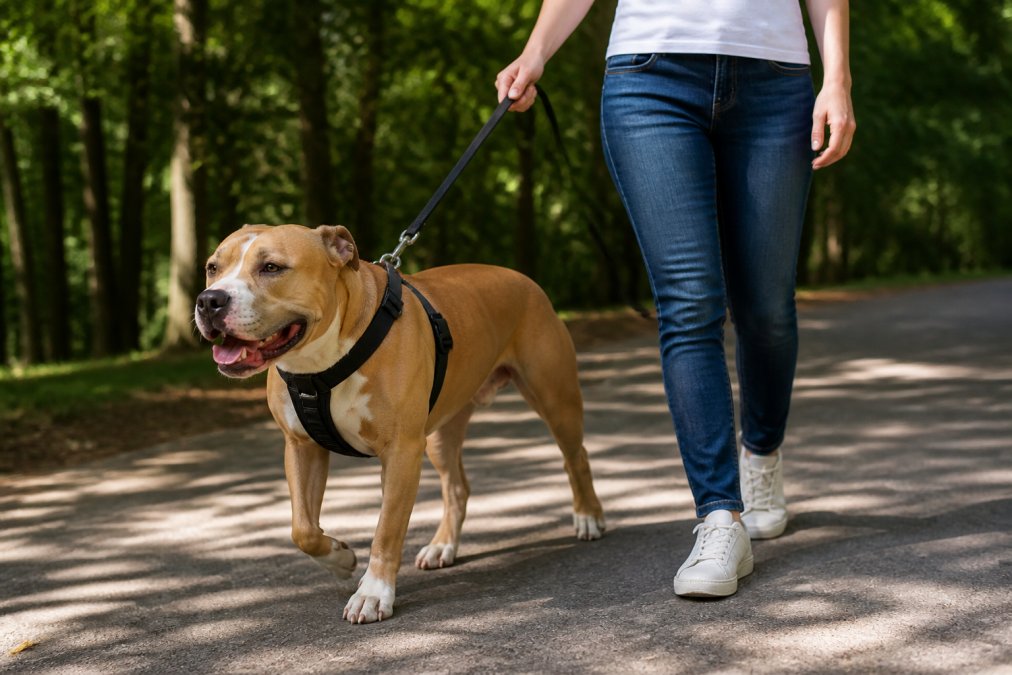
No-Pull Training Techniques and Leash Pressure Management
No-pull training works by making pulling ineffective. The moment your dog pulls, you stop moving. You don't jerk the leash, don't yell, don't punish, you simply become immovable. Within 5-10 repetitions, most dogs realize that pulling stops the walk, and not pulling allows progress.
Start training in a low-distraction environment: your yard or a quiet street. Walk at a normal pace. The moment your dog pulls forward, stop completely. Don't move until the leash goes slack. When slack appears, take one step forward. Repeat. Most dogs catch on within a week of daily 10-15 minute sessions. The key is consistency, every person walking the dog must follow the same rule.
This technique requires a leash that lets you hold your ground without straining. A traffic lead (a shorter leash, typically 2-4 feet) gives you better control in tight spaces and makes the stopping action more immediate.
Choosing the Right Leash Length for Control
Leash length affects your ability to manage pulling behavior. A 6-foot leash is standard, but it's not ideal for strong pullers during training. A longer leash gives your dog more momentum to build up speed before hitting the end, which means harder jerks and more force transmitted to your shoulder and wrist.
For training a strong puller, start with a 4-foot leash or a traffic lead. This shorter length gives you quicker response time and reduces momentum buildup. Once your dog understands that pulling doesn't work, you can transition to a 6-foot leash for normal walks. In crowded areas or near traffic, a shorter leash keeps your dog closer and gives you faster reaction time if a distraction appears.
Best Harness for Dogs That Pull
While this guide focuses on leashes, the best harness for dogs that pull works in tandem with proper leash choice. A no-pull harness redirects your dog's forward momentum to the side when they pull, making pulling less rewarding. Standard harnesses actually encourage pulling, they're designed for forward motion and give your dog mechanical advantage. A front-clip harness attaches at the chest, so pulling turns your dog toward you instead of forward. Pair it with a durable leash rated for your dog's weight, and you've built a system that works.
Top Durable Leashes for Strong Pullers: Comparison Table
| Leash Type | Material | Tensile Rating | Best For | Price Range |
|---|---|---|---|---|
| LED Retractable Leash | Nylon webbing + biothane handle | 200-250 lbs | Visibility + durability | $50-$70 |
| Biothane Standard Leash | Biothane | 250-300 lbs | Weather resistance | $40-$60 |
| Reinforced Nylon Webbing | Nylon with box stitching | 200-250 lbs | Budget option | $20-$35 |
| Traffic Lead (Short Leash) | Biothane or reinforced nylon | 200-300 lbs | Training + control | $25-$45 |
1. LED Retractable Dog Leash: Safety Meets Durability
The LED Retractable Dog Leash from Lola's Favorite Pet Gear combines durability for strong pullers with built-in LED lighting that makes evening walks visible to cars and other pedestrians. This leash is rated for 200+ pounds of tensile strength and uses heavy-duty hardware with a swivel snap that resists tangling.

The handle is ergonomic and anti-slip, which matters during high-tension pulls. The locking mechanism is smooth and reliable, holding position without drift and releasing smoothly when you need to extend the leash. The retractable design lets you adjust length from 16 feet down to locked position, giving you flexibility for different environments.
Key Features and Real-World Performance
The LED lighting activates automatically in low-light conditions and runs on replaceable batteries (included). The webbing is reinforced with double stitching throughout, and metal reinforcement plates at the hardware connection points prevent clip failure. The swivel snap rotates freely under load, reducing tangling and distributing rotational stress.
The one limitation: retractable leashes require more hand strength to manage than fixed-length leashes during sudden pulls. If your dog lunges hard, the sudden extension can catch you off guard.
Pros and Cons
Pros:
- LED lighting adds genuine safety value for evening and early-morning walks
- Swivel snap and heavy-duty hardware prevent clip failure
- Ergonomic handle reduces hand fatigue during long walks
- Adjustable length (16 feet to locked) gives flexibility
- Priced at $60.99, competitive for the feature set
Cons:
- Retractable mechanism requires more hand coordination than fixed leashes
- Not ideal for training a strong puller (the extension mechanism can reinforce pulling behavior)
- Battery replacement needed every 6-12 months depending on use
For established walkers with dogs that already know not to pull, this leash excels. For training a strong puller, a fixed-length leash is better because you can't accidentally give your dog extra length during a pull.
Breed-Specific Recommendations and Sizing
Not all strong pullers are the same. A 60-pound Golden Retriever pulls differently than a 90-pound German Shepherd.
Large retrievers and sporting breeds (Labs, Goldens, Weimaraners) tend to pull with consistent forward force. A standard 6-foot leash with 200+ pounds tensile strength handles them well. Biothane material is ideal because they often swim and spend time in water.
Herding breeds (German Shepherds, Australian Shepherds, Border Collies) pull with sudden jerks and directional changes. They need a leash that handles rotational stress well. A swivel snap is essential. These dogs benefit from a traffic lead during training because the shorter length gives you quicker feedback about directional changes.
Pit Bulls and similar muscular breeds generate enormous pulling force relative to their size. A 50-pound Pit Bull can pull like an 80-pound Lab. These dogs need leashes rated for 250+ pounds tensile strength. A front-clip harness paired with a durable leash is the best combination for this group.
Giant breeds (Great Danes, Mastiffs, St. Bernards) are often surprisingly gentle pullers, but their size means even moderate pulling creates significant force. They need 250+ pound tensile rating and oversized hardware.
Safety Features That Matter: Reflective Stitching and Shock-Absorbing Technology
Two safety features dramatically improve durable leashes for strong pullers: reflective stitching and shock-absorbing technology.
Reflective stitching uses thread embedded with reflective material. When car headlights hit the leash, it glows, making you and your dog visible from much farther away. Quality reflective stitching remains visible for years; cheap versions fade or wash out within months.
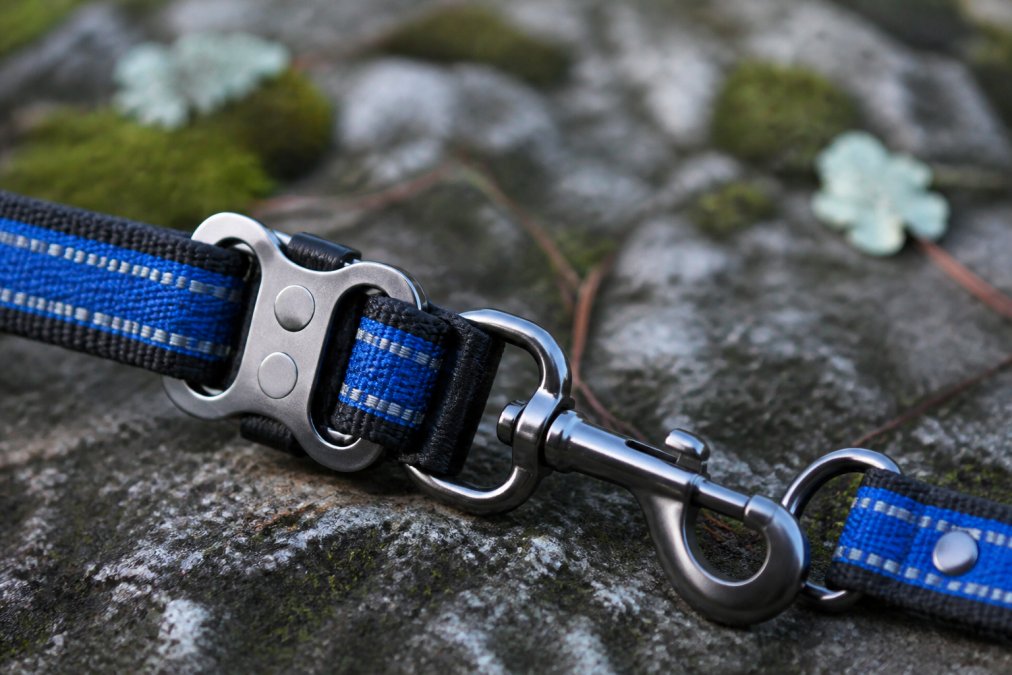
Shock-absorbing technology uses elastic or bungee sections built into the leash. When your dog pulls hard or lunges, the elastic section stretches slightly, absorbing the sudden force instead of transmitting it directly to your wrist and shoulder. The best shock-absorbing leashes use a bungee section near the clip end, where the force is highest. Quality shock-absorbing leashes are typically 10-15% more expensive than standard leashes, but the injury prevention justifies the cost if you have a strong puller.
Durable leashes for strong pullers aren't luxury items, they're safety equipment. The right leash prevents clip failures that send your dog running into traffic, resists degradation that leaves you with a frayed, unreliable tool, and gives you the control you need during training.
Lola's Favorite Pet Gear's LED Retractable Dog Leash delivers on durability with heavy-duty hardware, reinforced stitching, and a swivel snap rated for 200+ pounds of tensile strength. The added LED safety feature addresses a real gap in evening visibility. At $60.99, it's a solid investment in both safety and durability. Shop Now and upgrade your walking gear with equipment built to last.
Frequently Asked Questions
What is the most durable material for a dog leash?
Biothane and heavy-duty nylon webbing are the most durable leash materials. Biothane resists water, mildew, and extreme weather, making it ideal for outdoor use. Nylon webbing offers excellent tensile strength when reinforced with tight stitching and quality hardware. Both materials can handle the constant tension from strong pullers when combined with heavy-duty hardware rated for your dog's weight.
How do I know if a leash will hold my strong puller?
Check the weight-rating specifications on the product. A quality durable leash for strong pullers should have a tensile strength rating that exceeds your dog's weight by at least 50 pounds. Look for leashes with reinforced stitching, swivel snaps to prevent twisting, and heavy-duty hardware. Test reviews often mention real-world performance with large or reactive dogs.
Should I use a harness or a collar for a dog that pulls?
A harness is generally better for strong pullers because it distributes leash pressure across the dog's chest and body rather than concentrating it on the neck. Harnesses reduce strain on the trachea and give you better control. A no-pull harness combined with a durable leash provides the safest, most effective walking setup for reactive dogs or heavy pullers.
Are bungee leashes better for strong pullers?
Bungee leashes with shock-absorbing sections can reduce sudden jerks and impact on both dog and handler, making walks more comfortable. However, they work best as supplementary tools alongside training. For true durability with a strong puller, pair a bungee section with a primary leash made from biothane or reinforced nylon webbing with heavy-duty hardware for escape-proof control.
This article was written using GrandRanker