

Table of Contents
- Essential Gear for New Dog Owners: What You Actually Need
- Feeding and Hydration Supplies
- Sleeping and Resting Areas: Durable Dog Crates and Bedding
- Leashes, Collars, and Harnesses
- Grooming and Hygiene Tools
- Toys and Enrichment Items
- House Training Essentials and Best Practices for Puppy Proofing
- Setting Your New Dog Supply Budget
Essential Gear for New Dog Owners: What You Actually Need
Bringing home a new dog is exciting and overwhelming. You're suddenly responsible for a living creature's comfort, safety, and happiness, and the sheer volume of gear available online makes it easy to panic-buy things you don't need. At Lola's Favorite Pet Gear, we provide a curated selection of high-quality pet essentials designed to enhance the comfort, style, and daily care of your furry companions.
You don't need everything, but you do need the right essentials. Knowing the difference between must-haves and nice-to-haves will save you money, space, and decision fatigue. This guide breaks down essential gear into categories that matter: feeding, sleeping, walking, grooming, enrichment, house training, and budgeting.
Must-Haves vs. Nice-to-Haves
Must-haves directly support your dog's health, safety, and basic comfort. Nice-to-haves enhance the experience but aren't required for your dog to thrive.
Must-haves include:
- Food and water bowls or a feeder station
- A collar, leash, and ID tag with your contact information
- A crate for house training and safe containment
- Bedding or a bed for sleeping
- Age-appropriate toys for mental stimulation
- Waste bags and a cleanup tool for walks
- Basic grooming supplies (brush, nail clippers)
- Pee pads for puppies still learning house training
Nice-to-haves that add comfort or convenience:

- A harness for better control during walks
- An elevated feeder to reduce neck strain
- A portable water bowl for travel
- Specialized toys for separation anxiety
- Grooming wipes for quick cleanups
- A travel crate or car seat cover
Starting with must-haves lets you observe your dog's actual needs before investing in specialized gear. A puppy prone to separation anxiety might genuinely benefit from a lick mat or puzzle toy, but buying ten enrichment items before you know your dog's personality is wasteful.
Feeding and Hydration Supplies
Your dog needs consistent access to fresh water and nutritionally appropriate food.
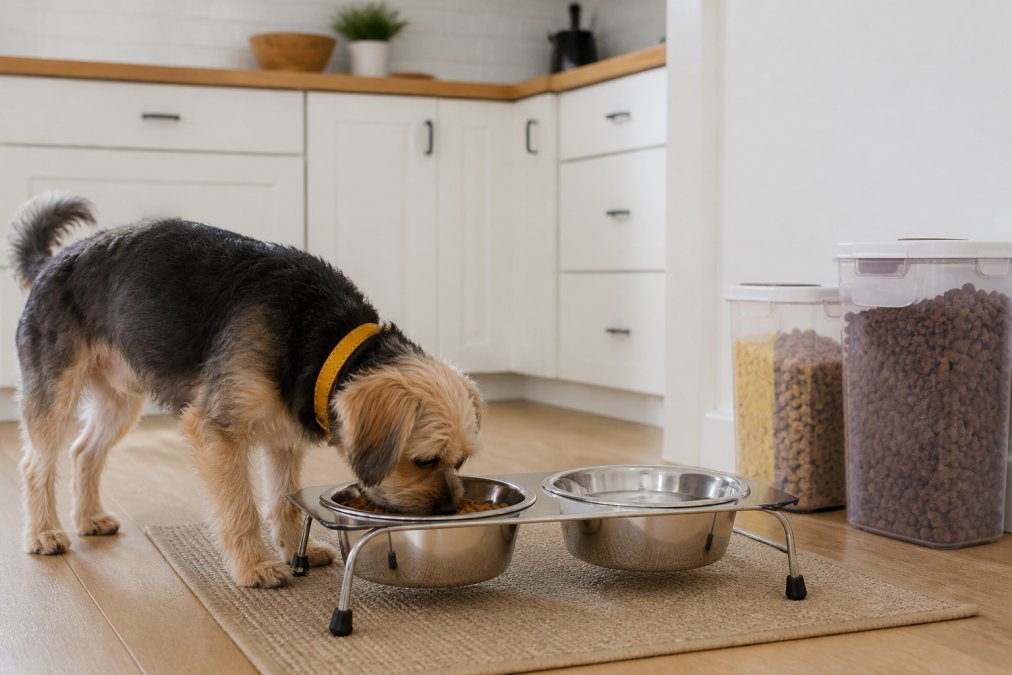
A basic setup includes food and water bowls. Stainless steel or ceramic bowls are durable and easy to clean; avoid plastic, which can harbor bacteria and retain odors. A 2-in-1 feeder station keeps food and water in one designated spot, reducing spills and containing mess. The Lola's Favorite Pet Gear 2-in-1 Dog & Cat Feeder Station ($66.99) uses an anti-tip base and floating disk design that keeps your pet's mouth dry while water stays fresh.
For water specifically, consider a collapsible bowl if you travel frequently. A portable pet bottle, like the AquaPaws™ Portable Pet Bottle from Lola's Favorite Pet Gear, eliminates the guesswork of finding water sources while traveling.
Puppies typically eat three to four times daily, while adult dogs eat once or twice (aafco.org). The right bowls make feeding predictable and mess-free. Elevated feeders reduce neck strain for larger breeds but are optional unless your dog has joint issues or your vet recommends one.
Sleeping and Resting Areas: Durable Dog Crates and Bedding
Your dog needs a designated sleeping space for comfort and house training. A crate serves dual purposes: it's a safe den where your dog can rest undisturbed, and it's essential for crate training and house training.
Crate size matters. Your dog should be able to stand, turn around, and lie down comfortably, but not so much extra space that they use one corner as a bathroom. For puppies, a crate with a divider panel lets you adjust the space as your dog grows, saving money over time.
Material depends on your needs. Wire crates offer visibility and airflow. Plastic crates are portable and feel more den-like. Soft-sided crates work for calm adult dogs but aren't suitable for puppies or chewers.
Bedding inside the crate should be comfortable but washable. Orthopedic foam beds provide better support, especially for senior dogs or breeds prone to joint issues. A separate dog bed outside the crate gives your dog a comfortable spot to rest in common areas, teaching them to settle on their own bed rather than claiming the couch.
Leashes, Collars, and Harnesses
Walking your dog safely requires proper restraint equipment. A collar and leash are non-negotiable; a harness is often necessary depending on your dog's size, strength, and pulling behavior.
A basic collar holds your dog's ID tag and serves as an attachment point for the leash. Genuine leather collars are durable and age well. The Lola's Favorite Pet Gear Classic Leather Dog Collar with Hangtag ($56.99) uses heavy-duty stainless-steel hardware and water-resistant leather that lasts through years of daily wear.

Your dog's ID tag is literally a lifeline. Include your name, phone number, and address. A microchip provides backup identification if the tag is lost. Together, they're your best defense against permanent separation if your dog escapes.
A standard leash (4-6 feet) gives you control on walks. Retractable leashes offer flexibility but can be dangerous if your dog lunges into traffic. An LED retractable leash like the one from Lola's Favorite Pet Gear LED Retractable Dog Leash ($60.99) adds visibility during evening walks with thumb lock control and built-in lights.
A harness distributes pressure across your dog's chest and back rather than concentrating it on the neck, which is especially important for puppies and small breeds prone to tracheal collapse. A front-clip harness redirects a pulling dog's momentum toward you, making walks easier without choking. For strong pullers, a well-fitted harness is transformative.
Test the fit by sliding two fingers under the straps; if you can't, it's too tight. If you can fit your whole hand, it's too loose.
Grooming and Hygiene Tools
Regular grooming keeps your dog healthy and reduces shedding and odor in your home.
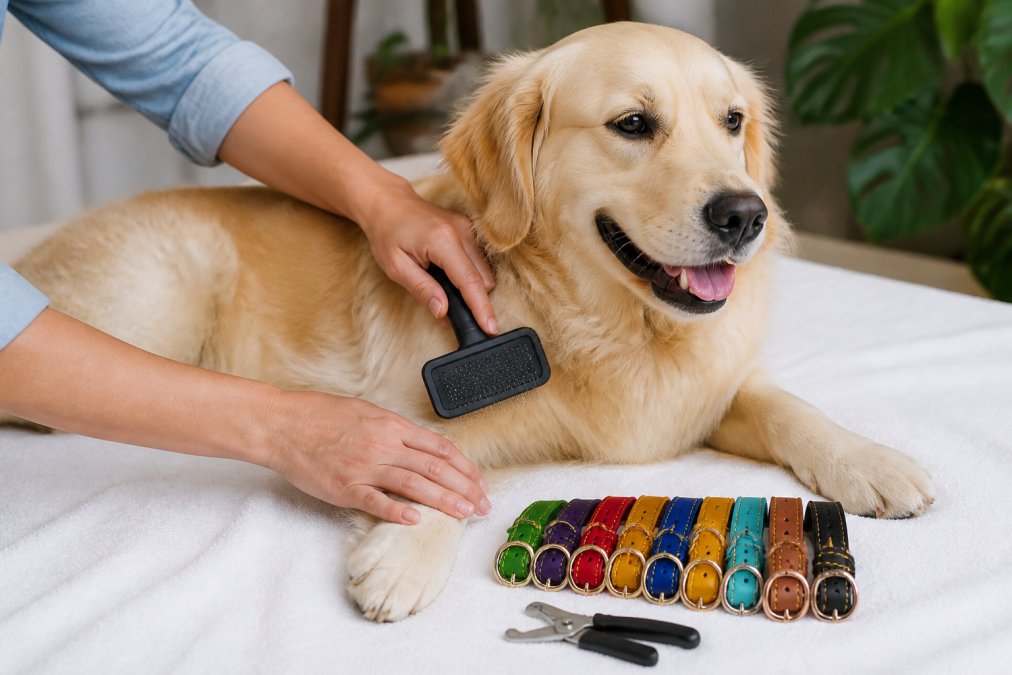
A slicker brush removes mats and loose fur. A undercoat rake works for double-coated breeds. Nail clippers trim overgrown nails; long nails affect your dog's gait and can cause joint pain. A nail grinder is an alternative if your dog is nervous about clippers.
Dental care matters. Tooth brushing is ideal, but dental chews and water additives help if brushing isn't realistic. Ear cleaning prevents infections, especially in floppy-eared breeds.
A portable paw cleaner like the one from Lola's Favorite Pet Gear Portable Dog Paw Cleaner ($84.99) uses soft silicone bristles to gently remove dirt and mud from your dog's paws before they track it inside. This is especially valuable if you live with carpet or have a dog prone to muddy paws.
Dog wipes or washcloths let you spot-clean between baths. A grooming routine doesn't require expensive equipment; it requires consistency.
Toys and Enrichment Items
Toys provide mental stimulation, reduce boredom, support positive reinforcement training, and satisfy your dog's natural instinct to chew. The right toys depend on your dog's age, size, and chewing intensity.
Puppies need soft toys for teething relief. Durable chew toys made from rubber or nylon withstand aggressive chewing better than fabric. Puzzle toys and treat-dispensing toys engage your dog's brain and slow down eating, which aids digestion. A lick mat provides extended mental engagement and helps with separation anxiety.
Rotation matters. Rotating toys every few days makes old toys feel new again, extending their engagement value. The size and material of toys must match your dog's size and chewing style. A toy small enough to swallow is dangerous; a toy too large for your dog's mouth is frustrating.
Interactive toys that require problem-solving, puzzle feeders, snuffle mats, and Kong toys stuffed with treats provide enrichment that prevents destructive behavior. Many new owners underestimate how much mental stimulation their dog needs. A tired dog is a well-behaved dog.
House Training Essentials and Best Practices for Puppy Proofing
House training success depends on consistency, patience, and the right tools.
Pee pads are useful for puppies who can't hold their bladder through the night or for apartment dwellers who can't access outdoor space immediately. Place them in a designated area away from sleeping and eating spaces. Puppies naturally avoid soiling their sleeping area, so a crate combined with regular outdoor breaks accelerates house training.
Puppy-proofing your home prevents accidents and destructive behavior. Remove tempting items: shoes, electrical cords, houseplants. Use baby gates to restrict access to unsupervised areas. Enzymatic cleaners eliminate urine odor, which prevents repeat accidents in the same spot; regular cleaners don't work because dogs can still smell the urine.
Positive reinforcement is the most effective house training method. Take your puppy outside frequently: after eating, after playing, after waking, and before bed. When they eliminate outside, praise enthusiastically and reward with treats. Never punish accidents; punishment creates fear and confusion, not understanding.
A waste management tool like the Lola's Favorite Pet Gear Dog Waste Poop Picker Tool ($87.99) makes cleanup during walks quick and one-handed. It hooks onto your leash and includes six rolls of biodegradable bags.

Most puppies are reliably house trained by 4-6 months, but some take longer (akc.org). Consistency matters far more than speed.
Setting Your New Dog Supply Budget
Understanding the new dog supply budget helps you prioritize spending.
| Item Category | Budget Range | Notes |
|---|---|---|
| Crate & Bedding | $80-250 | Quality crates last for multiple dogs |
| Collar, Leash, Harness | $60-150 | Leather collars and quality harnesses justify cost |
| Food & Water Bowls | $20-70 | 2-in-1 feeders offer convenience |
| Grooming Tools | $30-100 | Slicker brush, nail clippers, paw cleaner |
| Toys & Enrichment | $40-120 | Rotate toys to extend engagement |
| Waste Management | $15-90 | Poop picker tools and bags |
| Initial Supplies Total | $245-780 | First-month essentials |
Initial costs for essential gear typically range from $250 to $800 depending on quality choices. Start with mid-range products and upgrade specific items based on actual needs. If your dog shows no interest in toys, you don't need an extensive collection. If your dog is a destructive chewer, investing in durable toys and a quality crate makes sense.
Long-term cost savings come from choosing durable products upfront. A leather collar costs more initially but outlasts three cheap nylon collars. A quality crate lasts through multiple dogs. A durable brush and nail clippers serve for years.
Lola's Favorite Pet Gear focuses on this balance: products built to last without unnecessary premium pricing. The 2-in-1 Feeder Station, LED Retractable Leash, Portable Paw Cleaner, and Waste Poop Picker Tool are all designed for daily use and durability.
Bringing home a new dog is an investment in years of companionship. The right essential gear sets you up for success from day one through intentional choices that match your dog's actual needs. Lola's Favorite Pet Gear has built its collection around this principle: quality products that simplify daily care, from the durable 2-in-1 Feeder Station to the LED Retractable Leash that keeps evening walks safe. Start with the must-haves, observe your dog's personality and needs, and upgrade strategically. Your new dog deserves comfort and safety; you deserve tools that make pet ownership effortless.
Frequently Asked Questions
Q: What are the essential things to buy for a new dog?
A: Start with food and water bowls, a collar and leash, a crate or bed, toys, grooming tools, and waste management supplies. The 3-3-3 rule helps: expect 3 days for your dog to decompress, 3 weeks to adjust to routines, and 3 months to feel truly at home. Prioritize items that support safety, feeding, rest, and house training first. Premium-quality versions of these basics last longer and reduce replacement costs.
Q: How much should I budget for initial dog supplies?
A: Budget $200-$500 for essential gear depending on your dog's size and your quality preferences. This covers a collar, leash, food/water bowls, a bed or crate, basic toys, and grooming tools. Factor in ongoing costs: food, treats, and preventive care. Investing in durable dog crates and bedding upfront costs more initially but saves money over time by avoiding frequent replacements, reducing your new dog supply budget's long-term impact.
Q: What makes premium pet products worth the extra cost?
A: Premium products use better materials, safer manufacturing, and more durable construction. A genuine leather collar withstands daily wear better than synthetic alternatives. High-quality bedding resists wear and maintains support longer. The long term cost savings of premium pet products become clear when you calculate replacement frequency: a durable leash can last longer than cheaper options, which may need replacing more frequently.
Q: How do I puppy-proof my home before bringing my dog home?
A: Secure electrical cords, remove toxic plants, store chemicals safely, and block access to small objects. Use baby gates to restrict areas and create a designated safe zone. Best practices for puppy proofing include removing temptation (shoes, socks, houseplants) and providing appropriate chew toys instead. Set up a crate in a quiet area for rest and security. Positive reinforcement, rewarding calm behavior, helps your dog learn house rules faster than punishment.
Q: What gear do I need for traveling with my new dog?
A: Invest in a travel crate, car seat harness, collapsible bowls, portable paw cleaner, and waste bags. A seatbelt harness keeps your dog safe during drives. Portable water bottles and collapsible bowls provide hydration and feeding options anywhere. A portable paw cleaner prevents muddy tracks in your car or hotel. These items make travel safer and more convenient for both you and your dog.
Q: Are eco-friendly pet products as durable as standard options?
A: Many eco-friendly alternatives match or exceed standard durability. Biodegradable waste bags are as strong as plastic versions. Sustainable bedding made from recycled materials can be just as long-lasting as conventional options. Look for products certified for durability and and read reviews from other pet owners. Eco-friendly and sustainable product alternatives often cost slightly more upfront but support environmental responsibility while maintaining quality.
Q: How do I know what size crate and bedding my dog needs?
A: Measure your dog from nose to tail and floor to the top of their head when standing. Your dog should be able to stand, turn around, and lie down comfortably without extra space. Too large encourages accidents during house training; too small causes stress. For durable dog crates and bedding, choose sizes that accommodate your dog's adult weight if they're still growing. Check product specifications carefully, and consider breed-specific needs for unusual body shapes.
Q: What identification and safety gear does my new dog need?
A: A collar with an ID tag, microchip registration, and a secure leash are non-negotiable. The ID tag should include your current phone number. Microchipping provides permanent identification if your dog gets lost. A seatbelt harness or travel crate is essential for car safety. For walks, use a properly fitted collar or harness with positive reinforcement training to prevent pulling and escape. These items protect your dog's safety and increase recovery chances if they get lost.
This article was written using GrandRanker