

Table of Contents
- How to Clean Muddy Pet Paws: The Complete Process
- Step-by-Step: How to Clean Muddy Paws at Home
- DIY Dog Paw Cleaner Solutions You Can Make at Home
- How to Protect Dog Paws From Mud Before It Happens
- Dog Paw Care After Cleaning: Essential Post-Wash Steps
- Breed-Specific Cleaning Challenges and Solutions
- Common Mistakes to Avoid When Cleaning Muddy Paws
- Conclusion
Last Updated: July 29, 2026
How to Clean Muddy Pet Paws: The Complete Process
Muddy paws are inevitable during wet seasons. Learning to clean them effectively keeps your home cleaner while protecting your dog's health. At Lola's Favorite Pet Gear, we provide practical solutions that work without excessive stress. A structured approach using the right tools transforms paw cleaning from a frustrating chore into a quick, manageable task.
What You'll Need Before You Start
Gather supplies before beginning to make the process smoother:
Essential cleaning tools:
- A basin or bucket (at least 8 inches deep)
- Lukewarm water
- Microfiber towels
- A dedicated paw cleaner tool with soft silicone bristles
- Mild dog shampoo or paw-specific cleanser
Optional items:
- Handheld shower sprayer
- Paw balm or protective salve
- Non-slip mat
- Dog treats for positive reinforcement
The Lola's Favorite Pet Gear Portable Dog Paw Cleaner ($84.99) features soft silicone bristles designed for muddy paw removal. The cup-style design contains water splashing and works well for dogs that resist soaking their paws.
Step-by-Step: How to Clean Muddy Paws at Home
These seven steps can be completed in 5-10 minutes once you develop a rhythm.
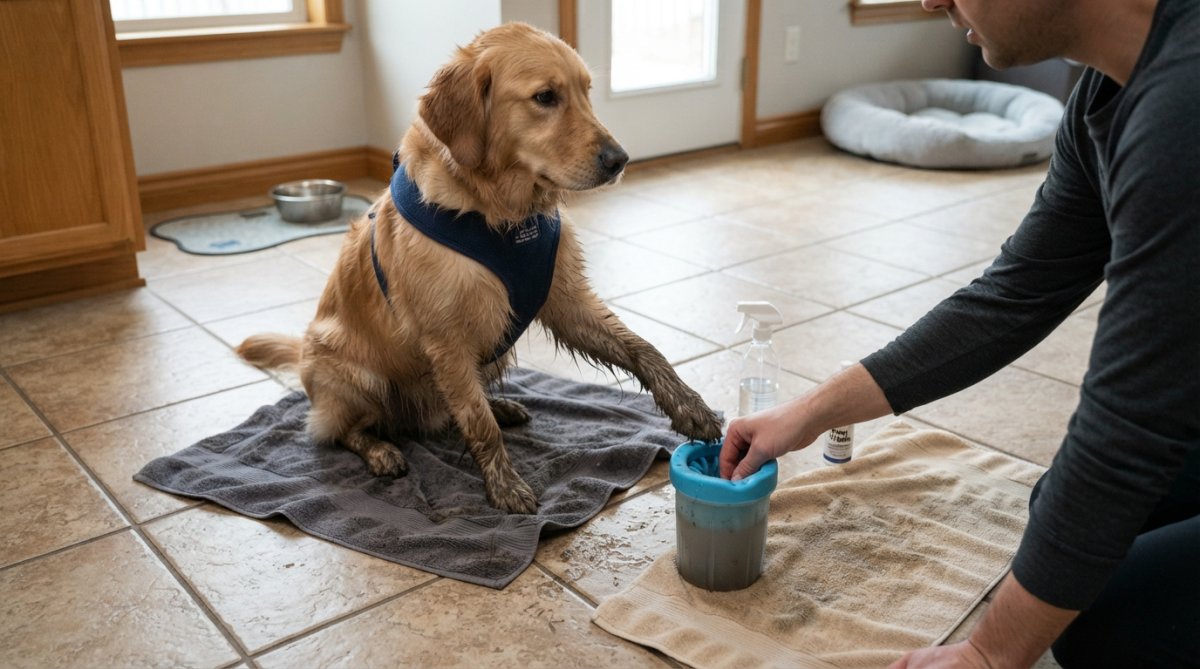
Step 1: Prepare Your Cleaning Station
Choose a location near an entryway where water splashing won't damage flooring. Fill your basin with lukewarm water, not hot, which irritates paw pads, and not cold, which dogs dislike. Place supplies within arm's reach. Position a non-slip mat under the basin to prevent sliding.
Step 2: Rinse Off Excess Mud
Rinse away loose mud without a cleaner tool. This initial rinse removes the surface layer and makes subsequent scrubbing more effective. Use gentle pressure with a handheld sprayer or simply dunk each paw gently in the water. Change the water if it becomes visibly dirty.
Step 3: Soak and Soften Stubborn Buildup
For dried mud, let paws soak for 30-60 seconds. This softens the mud and reduces scrubbing force needed. Some owners add mild dog shampoo to the water at this stage. Don't soak longer than a minute or two, as extended soaking can dry out paw pads.
Step 4: Use a Dog Paw Cleaner Tool
Use your paw cleaner tool with gentle circular motions, focusing on spaces between toes where mud hides. Pay special attention to the underside and between toe pads. The Lola's Favorite Pet Gear Portable Dog Paw Cleaner works by rotating the cup gently around each paw. Work methodically through all four paws, rinsing the tool between paws if water becomes too muddy.
Step 5: Dry Thoroughly
Thorough drying prevents bacterial and fungal growth. Use microfiber towels, which absorb water more efficiently than cotton. Dry between each toe individually, this is where moisture gets trapped and causes problems. If your dog tolerates it, use a handheld dryer on the lowest heat setting, keeping it moving to avoid burns.
Step 6: Trim Excess Paw Hair
Longer hair around paw pads traps mud and moisture, making cleaning harder and increasing infection risk. Use small, blunt-tipped scissors or dog grooming clippers to trim hair between toe pads and around the bottom of the paw. This is especially important for Doodles, Poodles, and other curly-haired breeds. Trim only hair between toes and on the underside; leave protective hair on top alone. Most groomers recommend this trim every 4-6 weeks during muddy seasons.
Step 7: Apply Paw Balm for Protection
After cleaning and drying, apply dog-safe paw balm to protect against cracking and irritation. Paw balms create a moisture barrier that prevents dirt from adhering to paw pads. Choose balms formulated for dogs, as human products can be toxic if ingested. Massage balm gently into paw pads and between toes.
DIY Dog Paw Cleaner Solutions You Can Make at Home
Commercial paw cleansers work well, but many pet owners prefer making their own solutions from household ingredients.
Simple water-based rinse: Lukewarm water with no additives works for light mud and daily maintenance with zero risk of irritation.
Apple cider vinegar soak: Mix one part apple cider vinegar with three parts water. This solution has mild antimicrobial properties and can help prevent bacterial growth. Soak paws for 30 seconds, then rinse thoroughly with plain water.
Oatmeal and honey wash: Blend colloidal oatmeal with a small amount of raw honey and water to create a paste. Oatmeal soothes irritated skin while honey has natural antibacterial properties. Apply gently, let sit for 30 seconds, then rinse.
Chamomile tea soak: Brew chamomile tea, let it cool to lukewarm, then use it as a soak. Chamomile has anti-inflammatory properties and a mild scent. Some dogs find the warmth comforting.
All DIY solutions require thorough rinsing with plain water afterward to prevent residue buildup.
How to Protect Dog Paws From Mud Before It Happens
Prevention is easier than intensive cleaning.
Preventative Measures for Mud Season
Paw protection booties: Dog boots designed for muddy conditions keep paws clean during walks. Most dogs adapt within a few wears.
Designated outdoor towel station: Keep old towels by your entryway and wipe paws before your dog enters. This removes 70-80% of mud and prevents the need for full paw washing in many cases.
Paw pad hair trimming: Shorter hair means less mud sticks to paws. Maintain regular trims year-round, with more frequent trimming during wet seasons.
Protective paw balm before outdoor time: Apply paw balm before walks to create a barrier that prevents mud from adhering tightly, making post-walk cleaning faster.
Breed-specific considerations: Doodles, Poodles, and curly-haired breeds accumulate mud faster and need more frequent paw attention. Short-haired breeds like Labradors dry faster. Long-haired breeds like Golden Retrievers need regular trimming to prevent matting.
Managing Mud at Your Entryway
Absorbent mat placement: Use washable, absorbent mats immediately inside your door to capture moisture and loose dirt. Wash mats weekly during muddy seasons.
Dedicated paw cleaning area: Establish a specific spot for paw cleaning near the entryway. Consistency helps dogs understand the routine.
Waterproof flooring choices: Tile, sealed concrete, or luxury vinyl plank withstand frequent wet paw traffic better than hardwood or carpet.
Boundary training: Train your dog to wait at the entryway for paw cleaning before proceeding into the house. Reward your dog for waiting patiently.
Dog Paw Care After Cleaning: Essential Post-Wash Steps
Proper post-cleaning care prevents infections and keeps paw pads healthy.
Moisture management: Ensure paws are completely dry, especially between toes. Use a soft cloth to gently press between toes rather than wiping, which can irritate skin.
Paw pad inspection: After cleaning, examine each paw pad for cracks, cuts, or signs of infection. Look for redness, swelling, or discharge.
Protective balm application: Apply a veterinary-approved paw balm after cleaning. Balms containing shea butter, coconut oil, or beeswax work well.
Nail maintenance: Check nail length during paw cleaning. Long nails increase injury risk and affect gait. Trim them or schedule a grooming appointment.
Paw pad health monitoring: Watch for signs of chronic irritation including excessive licking, limping, or reluctance to walk on certain paws. These signs indicate a problem needing veterinary attention.
Breed-Specific Cleaning Challenges and Solutions
Different breeds present unique challenges when it comes to paw cleaning.
Doodles and Poodles: These breeds have curly or wavy coats that trap mud extensively. Paws require cleaning after almost every outdoor session during muddy seasons. Regular professional grooming every 6-8 weeks, including paw pad trimming, is essential. Between appointments, trim hair between toes weekly and clean paws daily. The Pet Bath & Massage Glove with Shower Sprayer from Lola's Favorite Pet Gear ($60.99) works well for these breeds.
Short-haired breeds (Labs, Beagles, Boxers): These breeds dry faster, but mud still accumulates between toes. A quick wipe with a towel often suffices for light mud. During peak mud season, full washing 2-3 times weekly is usually adequate.
Long-haired breeds (Golden Retrievers, Collies): Long hair around paws mats easily when wet. These breeds need regular paw pad trimming and thorough drying after cleaning. Professional grooming every 6-12 weeks helps manage paw hair growth.
Large breed dogs: Larger dogs track more mud due to their size. Ground-level cleaning stations work better than basins. Consider using a handheld sprayer while your dog stands on a mat.
Senior dogs: Older dogs may have arthritis or mobility issues. Use shorter sessions with breaks. Warm water feels soothing to aging joints. Be gentle and watch for signs of discomfort.
Dogs with anxiety: Start with short sessions using treats and praise. Let your dog become comfortable with the cleaning area before introducing water. Gradual desensitization over weeks helps anxious dogs tolerate paw cleaning.
Common Mistakes to Avoid When Cleaning Muddy Paws
Using water that's too hot or cold: Hot water can burn sensitive paw pads. Cold water causes discomfort. Lukewarm water, around 85-90 degrees Fahrenheit, is ideal.
Skipping the drying step: Incomplete drying is the leading cause of paw pad infections. Moisture trapped between toes creates a breeding ground for bacteria and yeast.
Over-scrubbing with harsh tools: Using stiff brushes or aggressive scrubbing damages the protective outer layer of paw pads. Soft silicone bristles are gentler and equally effective.
Neglecting hair trimming: Long hair around paws traps moisture and mud. Regular trimming reduces cleaning time and prevents matting.
Using human products on dog paws: Human soaps and shampoos can irritate dog skin and are toxic if ingested. Always use products formulated for dogs.
Cleaning only visible mud: Mud hides between toes and in hair. Thorough cleaning requires attention to these hidden areas.
Inconsistent cleaning routine: Sporadic cleaning is less effective than consistent maintenance. Establish a routine so your dog knows what to expect.
Ignoring signs of infection: Red, swollen, or discharge-covered paws indicate infection requiring veterinary attention. Contact your veterinarian if you notice these signs.
Muddy paws don't have to mean a messy home or frustrated pet owner. By establishing a consistent cleaning routine and using the right tools, you can manage paw hygiene efficiently. The Lola's Favorite Pet Gear Portable Dog Paw Cleaner and Pet Bath & Massage Glove make this process faster with soft silicone bristles designed for gentle yet effective cleaning. Get started with Lola's Favorite Pet Gear today and enjoy cleaner floors and healthier paws for your furry companion.
Additional Resources
For more information on dog paw care and seasonal grooming, consult these authoritative sources:
According to the American Veterinary Medical Association's pet care guidelines, proper paw maintenance is essential for preventing infections and maintaining mobility throughout your dog's life.
Research from the Companion Animal Parasite Council on environmental contamination shows that muddy environments increase exposure to parasites and pathogens that can affect paw health.
The American Kennel Club's grooming standards recommend regular paw pad trimming and cleaning as part of routine dog maintenance, especially for breeds prone to matting and mud accumulation.
Frequently Asked Questions
What is the best way to clean muddy dog paws?
The most effective method combines rinsing, soaking, and using a specialized paw cleaner tool. Start by rinsing off excess mud with lukewarm water, then soak paws in a basin for 5-10 minutes to soften stubborn buildup. Use a paw cleaner with soft silicone bristles to gently remove dirt from between pads and around the nail area. Finish by drying thoroughly with a microfiber towel and applying paw balm for protection. This approach minimizes mess while maintaining paw pad health.
How do you clean muddy paws without a paw washer?
You can clean muddy paws effectively using household items: soak paws in a warm water basin with a few drops of mild dog shampoo, use a soft-bristled brush or old toothbrush to gently scrub between pads, and rinse thoroughly. A microfiber towel works better than regular towels for drying. For stubborn mud, let paws soak longer before scrubbing. DIY solutions like mixing water with a small amount of pet-safe castile soap also work well for de-mudding without specialized tools.
How do I stop my dog from tracking mud in the house?
Prevention is key during mud season. Create an entryway organization system with a designated paw cleaning station just inside the door. Keep a paw cleaner, towels, and water bowl in this area for quick cleanups before your dog enters living spaces. Consider placing washable rugs or mats at entry points to absorb moisture. Trim paw hair regularly to reduce mud clinging to fur. For outdoor prevention, apply a protective paw balm before muddy walks and establish a routine of cleaning paws immediately upon returning home.
What can I use to clean my dog's paws naturally?
Natural cleaning solutions include warm water with a small amount of pet-safe castile soap, coconut oil mixed with water for soaking, or plain warm water with a few drops of apple cider vinegar. These eco-friendly options are gentle on paw pad health and safe if your dog licks their paws. Avoid harsh chemicals and human cleaning products. A soft microfiber towel and natural bristle brush complete a chemical-free cleaning routine. Always rinse thoroughly and dry completely to prevent paw irritation.
This article was written using GrandRanker