

Table of Contents
- Why Accurate Measurements Matter for Dog Apparel
- Tools You'll Need to Measure Your Dog
- How to Measure Your Dog for Apparel: Step-by-Step
- Dog Clothing Size Chart by Breed
- Measuring Dogs with Thick Fur and Double Coats
- Common Dog Clothing Sizing Mistakes to Avoid
- Tips for Ensuring a Comfortable Fit
- Measuring for Specific Apparel Types
Last Updated: August 5, 2026
Why Accurate Measurements Matter for Dog Apparel
Getting the right fit for your dog's apparel ensures comfort, safety, and freedom of movement. A poorly fitting garment can restrict movement, cause chafing, or slip off entirely. Too tight, and your dog experiences discomfort or restricted breathing. Too loose, and the apparel becomes a tripping hazard.
At Lola's Favorite Pet Gear, we understand that every dog has a unique body shape. A dachshund's proportions differ dramatically from a bulldog's, and mixed breeds often surprise us with unexpected body configurations. Accurate measurements matter because sizing charts vary widely across brands, what one manufacturer calls "medium" might be completely different from another's interpretation. When you know your dog's actual measurements, you can compare them against any brand's size chart and make an informed decision.
Tools You'll Need to Measure Your Dog
The most essential tool is a soft measuring tape, similar to what tailors use for clothing. A soft fabric tape measure conforms to your dog's body contours far better than a rigid ruler. If you don't have one, you can use a piece of string and measure it against a ruler.
You'll also want a notepad or your phone to record measurements immediately. A helper makes the process easier, having someone gently hold your dog in position simplifies the entire process. Good lighting is important too; measure in a well-lit area where you can clearly see where you're placing the tape. Finally, have some high-value treats nearby to keep your dog motivated and cooperative.
How to Measure Your Dog for Apparel: Step-by-Step
Measuring your dog for apparel requires patience and precision. Follow these steps in order to get accurate measurements.
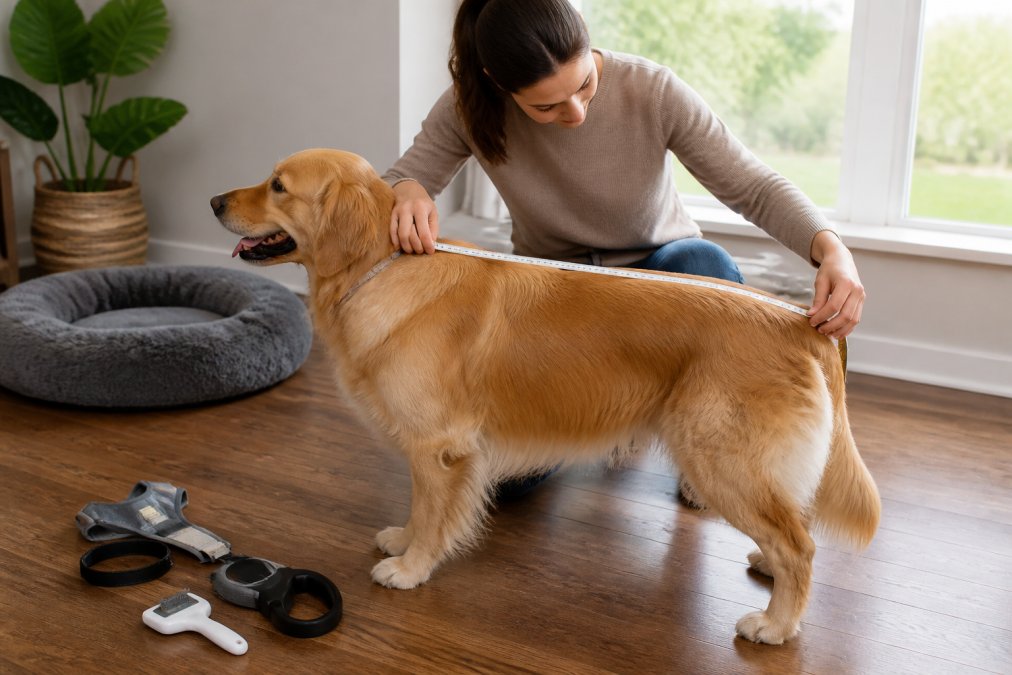
Step 1: Measure Back Length
Back length is the measurement from the base of your dog's neck to the base of their tail. This is the most important measurement for apparel fit because it determines how much coverage the garment provides along your dog's spine.
Place the soft tape measure at the base of your dog's neck, right where the neck meets the shoulders. Run the tape along the spine, keeping it snug but not tight, all the way to the base of the tail. Record this number in inches. Back length varies dramatically by breed, a Chihuahua might measure 6-8 inches, while a large German Shepherd could be 24-28 inches.
Step 2: Measure Chest Girth
Chest girth is the circumference around the widest part of your dog's chest, typically just behind the front legs. This measurement determines how snug or loose the apparel will fit around your dog's body.
Wrap the soft tape measure around your dog's body at the widest part of the chest. The tape should be snug enough that you can't slide a finger underneath it, but not so tight that you're compressing the ribcage. Record the measurement where the tape overlaps itself. This is often the most critical measurement for ensuring proper fit.
Step 3: Measure Neck Circumference
Neck circumference is the measurement around your dog's neck, typically where a collar would sit. This measurement is especially important for hoodies, sweaters, and any apparel with a neck opening.
Wrap the soft tape measure around the base of your dog's neck, right where a collar normally sits. Keep the tape snug but comfortable, you should be able to fit one finger between the tape and your dog's neck. Record where the tape overlaps. A neck opening that's too small will be difficult to put on and take off, while one that's too large allows cold air to enter.
Step 4: Measure Front Leg Length
Front leg length is the measurement from the top of the shoulder down to the wrist (the joint just above the paw). This measurement matters for apparel that has leg coverage, such as full-body suits or harness coats.
Have your dog stand naturally. Place the soft tape measure at the top of the front leg where it meets the shoulder. Run the tape down the outside of the leg to the wrist joint. Record this measurement. This is particularly important if you're considering harness coats or waterproof jackets with integrated leg coverage.
Dog Clothing Size Chart by Breed
While every individual dog is unique, breed-specific size charts provide a helpful starting point. Use these as guidelines, but always measure your specific dog rather than relying solely on breed information.
| Breed | Back Length | Chest Girth | Neck Circumference | Suggested Size |
|---|---|---|---|---|
| Chihuahua | 6-8 inches | 10-12 inches | 6-7 inches | XS |
| Pomeranian | 8-10 inches | 12-14 inches | 7-8 inches | XS-S |
| Toy Poodle | 8-10 inches | 12-14 inches | 7-8 inches | XS-S |
| Dachshund | 12-14 inches | 14-16 inches | 8-9 inches | S-M |
| Beagle | 12-14 inches | 16-18 inches | 9-10 inches | S-M |
| Bulldog | 14-16 inches | 18-22 inches | 10-12 inches | M-L |
| Cocker Spaniel | 14-16 inches | 18-20 inches | 10-11 inches | M |
| Golden Retriever | 20-22 inches | 24-28 inches | 13-15 inches | L-XL |
| Labrador Retriever | 22-24 inches | 26-30 inches | 14-16 inches | L-XL |
| German Shepherd | 24-28 inches | 28-32 inches | 15-17 inches | XL-XXL |
Individual dogs vary significantly based on genetics, diet, and overall body composition. Mixed breeds often fall between their parent breeds' measurements.
Measuring Dogs with Thick Fur and Double Coats
Dogs with thick or double coats present a unique measuring challenge. Breeds like Golden Retrievers, German Shepherds, Huskies, and Malamutes have dense fur that can make accurate measurements difficult if you're not careful.
When measuring a dog with thick fur, push the tape measure through the fur to contact the actual skin. If you simply lay the tape on top of the fur, you'll get an inflated measurement that doesn't reflect the dog's actual body size. Gently compress the fur enough to get an accurate measurement without pinching or causing discomfort. The difference between measuring over the fur and measuring to the skin can be substantial, sometimes an inch or more.
Common Dog Clothing Sizing Mistakes to Avoid
The biggest mistake is ordering based on your dog's weight alone. Weight tells you nothing about your dog's actual body dimensions. A muscular, athletic dog and a stocky, compact dog can weigh the same but have completely different measurements.
Another frequent error is assuming your dog wears the same size across all brands. Sizing standards vary dramatically between manufacturers. Always check each brand's specific size chart against your dog's actual measurements.
People often measure their dog in a sitting or lying position, which gives inaccurate readings. Always measure with your dog standing in a normal, relaxed stance. Forgetting to account for seasonal clothing layers is another common mistake, if you're buying a sweater to wear under a winter coat, you might need a slightly larger size. Measure your dog annually, or more frequently if their weight fluctuates significantly. Finally, take measurements when your dog is calm and in a normal standing position, not when they're excited or anxious.
Tips for Ensuring a Comfortable Fit
The apparel should be snug enough that it doesn't shift or slide during movement, but loose enough that your dog can breathe comfortably and move freely. You should be able to fit one finger between the garment and your dog's body at the chest and neck.
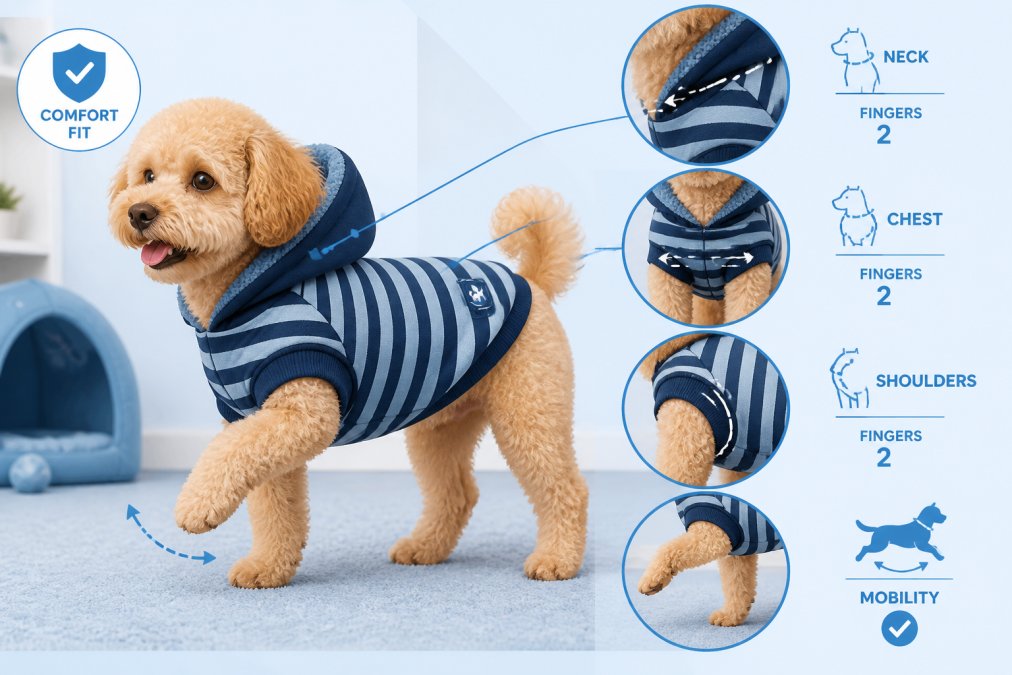
Check the range of motion in your dog's front legs. Your dog should be able to lift their legs naturally without the apparel restricting movement. Pay attention to how the apparel sits at the base of the tail, it should cover the area without pulling or creating uncomfortable pressure. The neck opening should allow your dog to breathe easily and swallow without restriction. Watch for signs of discomfort during the first wear, such as excessive scratching, reluctance to move, or attempts to escape the apparel. Apparel should not interfere with your dog's ability to use the bathroom comfortably.
Measuring for Specific Apparel Types
Different types of apparel have different fitting requirements. Understanding these differences helps you measure appropriately for each garment type.
Sweaters and Hoodies
Sweaters and hoodies rely primarily on back length and chest girth for proper fit. Back length is critical because it determines coverage along the spine, a sweater should extend from the base of the neck to approximately the base of the tail. Chest girth ensures the sweater fits snugly without restricting movement. Neck circumference matters for hoodies and sweaters with fitted neck openings.
The Striped Dog Hoodie Winter Outfit from Lola's Favorite Pet Gear is designed with these measurements in mind. The soft, cozy fabric provides warmth while allowing full range of motion in the shoulders and front legs. When ordering sweaters, consider whether your dog will wear anything underneath.

Harnesses and Harness Coats
Harness coats combine coverage with integrated harness functionality, so measurements become more complex. Chest girth is especially critical because the harness straps need to sit properly across the chest without shifting during use. The shoulder area is particularly important, the harness attachment points need to sit at the top of the shoulders, not too far forward or backward.
The Fleece Padded Dog Harness Coat from Lola's Favorite Pet Gear features integrated harness functionality with padded warmth. Front leg length becomes more important with harness coats because the leg coverage needs to accommodate the harness straps without creating uncomfortable pressure.
Raincoats and Waterproof Jackets
Raincoats and waterproof jackets need to fit snugly enough to keep water out but loosely enough to allow your dog to move freely in wet conditions. Back length is critical because the coat should provide full coverage from neck to tail. Chest girth is important, but raincoats can often fit slightly looser than sweaters because they're designed to go over other apparel.
The Waterproof Dog Harness Jacket from Lola's Favorite Pet Gear combines waterproof protection with integrated harness functionality. Raincoats need to allow adequate movement in the rear legs and hindquarters. The leg openings need to be large enough that your dog can lift and move their legs freely without the fabric bunching or restricting movement. Consider the closure system when measuring, it should be secure enough to keep the coat in place during walks but not so tight that it restricts your dog's movement or breathing.
Getting the right fit for your dog's apparel starts with accurate measurements. When you take the time to measure your dog properly, accounting for their unique body shape, coat type, and the specific apparel style, you eliminate the sizing guesswork that leads to returns and frustrated pets. At Lola's Favorite Pet Gear, we know that the perfect fit means your dog stays comfortable, warm, and stylish. Use this guide to measure your dog with confidence, then browse our collection of carefully selected apparel designed for comfort and durability. Shop Now and find the perfect pieces for your beloved companion.
Frequently Asked Questions
How should I position my dog when measuring for apparel?
Always measure your dog in a standing position on a flat surface with their body relaxed and weight evenly distributed. Avoid measuring while your dog is sitting, lying down, or stretching, as this will give inaccurate measurements. Have someone help hold your dog gently in place if needed, and use treats or toys to keep them calm and still during the process.
What's the difference between measuring for a sweater versus a harness coat?
Sweaters and hoodies require back length and chest girth measurements for proper fit. Harness coats need additional measurements around the armpits and front legs since they must accommodate the harness underneath. For raincoats and waterproof jackets, focus on back length and chest girth but allow slightly more room for layering over other clothing. Always check product-specific sizing guides before ordering.
How much extra room should I leave when measuring my dog for apparel?
Aim for a snug but not tight fit. You should be able to fit one or two fingers comfortably under the garment at the neck, chest, and back. This allows proper range of motion in the front legs and shoulders while keeping your dog warm and secure. Too much extra room causes dragging and discomfort; too little restricts movement and breathing.
My dog has a thick double coat. How do I measure accurately?
For dogs with thick fur or double coats, measure directly against the skin by parting the fur gently with your fingers, then place the tape measure against the skin without compressing the coat. This gives you true body measurements rather than measurements over the fur. You may need to size up by half a size to account for the bulk of the coat, ensuring the apparel fits comfortably over the fur without being restrictive.
This article was written using GrandRanker