

Table of Contents
- Understanding Why Your Dog Sheds: Shedding Cycles and Triggers
- Step 1: Master Regular Brushing Techniques to Reduce Shedding
- Step 2: Optimize Diet and Nutrition for Coat Health
- Step 3: Establish a Bathing and De-shedding Routine at Home
- Step 4: Address Stress-Induced Shedding and Home Environment
- Step 5: Implement Home Remedies for Dog Shedding Control
- Step 6: Manage Your Home Environment to Minimize Shed Hair
- Step 7: Know When to Seek Professional Grooming Help
How to Stop Dog Shedding at Home: 7 Proven Methods
Last Updated: July 25, 2026
Dog shedding is one of the most frustrating parts of pet ownership. The good news: how to stop dog shedding at home isn't as complicated as most guides make it sound. At Lola's Favorite Pet Gear, we've worked with thousands of pet owners to tackle this problem from multiple angles. The strategies that work combine regular maintenance with targeted nutrition and environmental controls.
Understanding Why Your Dog Sheds: Shedding Cycles and Triggers
Your dog sheds because it's a natural biological process. Hair follicles grow, rest, and shed on a cycle. The undercoat, that dense layer beneath the topcoat, is particularly prone to seasonal shedding.
Seasonal shedding vs. year-round hair loss represent two different patterns. Seasonal shedding happens during spring and fall when dogs "blow their coat," losing massive amounts of undercoat as they prepare for temperature changes. This is normal and temporary, typically lasting 3-6 weeks. Year-round shedding happens consistently throughout the year and is common in double-coated breeds like Golden Retrievers, German Shepherds, and Huskies.
When is dog shedding a concern? If your dog is losing hair in patches, has visible skin irritation, or is scratching excessively, that's a red flag. Excessive shedding can indicate allergies, parasites, stress, or nutritional deficiencies. A quick veterinary checkup rules out medical issues before you invest time in home remedies.
Step 1: Master Regular Brushing Techniques to Reduce Shedding
The single most effective way to stop dog shedding at home is consistent brushing. This removes loose hair before it falls on your floor, furniture, and clothes.
For double-coated breeds, a slicker brush removes mats and tangles from the topcoat. Follow with a deshedding tool like a Furminator, which reaches deep into the undercoat and pulls out loose hair that would otherwise shed naturally. For single-coated dogs, a slicker brush alone is often sufficient. Brush at least 2-3 times per week during normal shedding periods; during seasonal blowouts, daily brushing is essential.
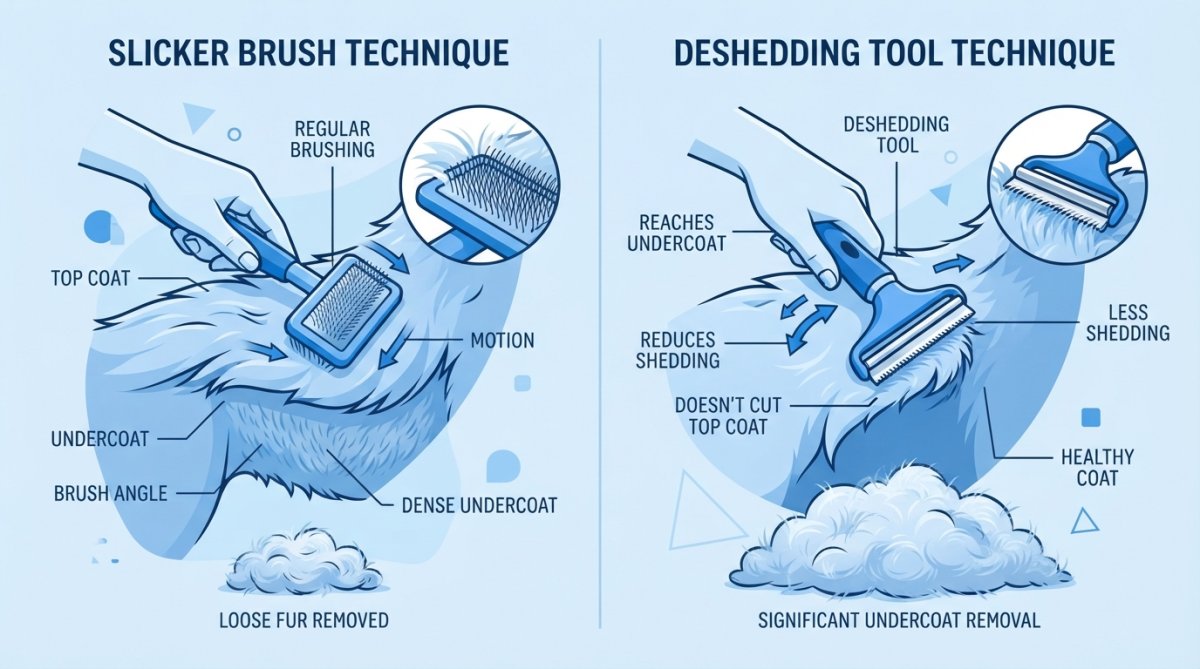
Brush in the direction of hair growth using gentle, consistent strokes. Pay special attention to areas behind the ears, under the tail, and around the hindquarters, where mats form easily and shedding is heaviest.
:::pro Most people brush too lightly. You want enough pressure that you're actually catching loose hair, not just skimming the surface. If you're not pulling out visible clumps during a blowout, you're not going deep enough into the undercoat. :::
Choosing the right deshedding tool for your dog depends on coat type and size. A Furminator works well for medium to large dogs with double coats. For smaller dogs or those with sensitive skin, a metal comb or undercoat rake is gentler. Lola's Favorite Pet Gear offers grooming tools designed specifically for different coat types, ensuring you have the right equipment without guesswork.
Step 2: Optimize Diet and Nutrition for Coat Health
A dog's coat health reflects what they're eating. Poor nutrition shows up as dull, brittle hair that sheds excessively. A high-quality diet with balanced protein, healthy fats, and essential micronutrients keeps hair follicles strong and reduces unnecessary shedding.
Protein and fat ratios for coat strength are foundational. Look for dog foods listing real meat (beef, chicken, fish, or lamb) as the first ingredient, with at least 18% crude protein for adult dogs and 22% for puppies. The fat content should be between 5-15% for most breeds. Many dogs see noticeably less shedding within 4-6 weeks of switching to a higher-quality diet.
Omega-3 fatty acids: the science behind shedding reduction. Omega-3s (specifically EPA and DHA) reduce systemic inflammation, strengthen hair follicle attachment to the skin, and improve skin barrier function. Fish oil is the most bioavailable source for dogs. Dosing depends on body weight: dogs under 25 pounds benefit from 250-500 mg combined EPA/DHA daily; 25-50 pounds, 500-1000 mg daily; over 50 pounds, 1000-2000 mg daily. Start with the lower end and increase gradually over 2 weeks to avoid digestive upset. Results typically appear within 6-8 weeks as new hair growth reflects improved follicle health. Flaxseed oil is less effective for dogs because canine metabolism poorly converts ALA (the plant-based Omega-3) to the EPA and DHA forms that actually reduce shedding.
Biotin, zinc, and other coat-supporting micronutrients. Biotin (vitamin B7) supports keratin production, the protein that makes up hair structure. Typical supplemental doses are 5-10 mg daily for medium dogs. Zinc is critical for skin cell turnover and immune function, but only supplement if a veterinary blood test confirms deficiency; excess zinc interferes with copper absorption and can cause neurological problems. Vitamin E works synergistically with Omega-3s as an antioxidant, protecting hair follicles from oxidative stress.
Identifying marketing hype versus evidence-based supplements. Many pet supplement companies make shedding claims without clinical support. Stick to supplements with established mechanisms and veterinary backing: fish oil (EPA/DHA), biotin, and zinc (if deficient) have the strongest evidence base. Ask your veterinarian which supplements are worth the cost for your dog's specific situation rather than buying based on packaging claims.
Step 3: Establish a Bathing and De-shedding Routine at Home
Bathing removes loose hair and prepares the coat for more effective brushing. Bathe your dog every 4-6 weeks using lukewarm water and a high-quality dog shampoo. Hot water dries out the skin and increases shedding; lukewarm water is gentler and more effective.
Use a shampoo designed for your dog's coat type. If shedding is heavy, look for de-shedding shampoos that help loosen undercoat hair. Work the shampoo into a lather and let it sit for a few minutes before rinsing thoroughly. Incomplete rinsing leaves residue that irritates skin and increases shedding.
Using high-velocity dryers for effective undercoat removal is a professional grooming technique you can use at home. These dryers blow water and loose hair out of the coat with force, removing far more undercoat than regular towel drying. Use the lowest heat setting to avoid damaging the coat. Most pet owners see a dramatic reduction in shedding for 2-3 weeks after using a high-velocity dryer during a blowout.
(/products/arc-power-dog-pet-bathing-grooming-massaging-glove-hair-remover-brush-shower-water-sprayer) at Home]Step 4: Address Stress-Induced Shedding and Home Environment
Stress triggers excessive shedding in many dogs. Anxiety, changes in routine, loud noises, or new environments can cause a dog to shed more than normal.
Creating a calm space and reducing anxiety triggers is foundational. Dogs need a quiet area where they can retreat, a crate, bed, or corner room away from household chaos. Maintain a consistent daily routine; dogs thrive on predictability. If your dog is anxious during storms, fireworks, or when you leave for work, address the anxiety directly through training, calming supplements, or professional behavior support. Some dogs respond well to background music or white noise, which masks startling sounds. Pheromone diffusers designed for dogs can reduce anxiety in specific spaces.
Step 5: Implement Home Remedies for Dog Shedding Control
Beyond the core strategies, several home remedies support coat health and reduce shedding. Apple cider vinegar added to water (1 tablespoon per quart) can improve skin health and reduce itching that triggers excessive shedding. Coconut oil applied topically or added to food supports skin health, though use sparingly. Bone broth adds collagen and minerals that support coat health; a tablespoon mixed into food a few times per week provides nutritional support. Pumpkin puree improves digestive health, which indirectly supports coat quality.
Step 6: Manage Your Home Environment to Minimize Shed Hair
Even with perfect coat management, some hair will shed. Managing your environment makes living with a shedding dog much easier.
Vacuum selection for different shedding patterns. For heavy seasonal shedders (Golden Retrievers, German Shepherds, Huskies), a dedicated pet-hair vacuum with a motorized brush roll designed to agitate and lift undercoat hair is essential. Bagless models are more practical than bagged for pet owners because you'll be emptying them frequently. Canister vacuums with HEPA filtration work well for year-round moderate shedders. For light shedders (Poodles, Bichons, some terriers), a standard vacuum is usually sufficient. Robotic vacuums are convenient for daily maintenance but lack the suction power for heavy shedding periods; use them as a supplement, not a replacement. Vacuum high-traffic areas 2-3 times per week during normal shedding, daily during seasonal blowouts. A handheld vacuum or cordless stick vacuum is useful for spot cleaning furniture and stairs between full vacuuming sessions.
Fabric choices and furniture protection strategies. Microfiber and leather furniture repel dog hair better than cotton or linen upholstery. If you have upholstered furniture, washable throws in microfiber or tightly woven cotton protect the underlying fabric and are easier to clean than trying to vacuum embedded hair. Darker-colored throws hide hair better than light colors. Furniture with tight weaves traps less hair than loose, textured fabrics. For bedding, microfiber sheets are easier to clean than cotton when your dog sleeps on the bed. Rugs with low pile (like berber or flat weave) are easier to vacuum than high-pile or shag rugs. Consider area rugs in high-traffic zones where your dog spends the most time.
Air purifiers and dander control. Airborne dog dander and loose hair circulate through your home's air, settling on surfaces and triggering allergies in sensitive people. A HEPA-filter air purifier (rated for your room size) captures particles as small as 0.3 microns, removing both visible hair and microscopic dander. Run the purifier continuously in the main living area where your dog spends the most time. Replace HEPA filters every 6-12 months depending on shedding intensity. Air purifiers don't eliminate the need for vacuuming, but they reduce visible floating hair and improve air quality.
Breed-specific environmental modifications. Double-coated breeds shed so heavily during blowouts that standard home management isn't enough. Consider designating a grooming area (garage, laundry room, or bathroom) where you brush your dog during peak shedding. Use a grooming table or elevated surface and lay down a tarp or old sheet underneath to catch loose hair. Single-coated breeds shed minimally year-round, so standard vacuuming 1-2 times per week is usually sufficient. Wire-haired breeds shed less than double-coated breeds but more than single-coated; weekly vacuuming and regular brushing manage shedding effectively.
| Strategy | Frequency | Best For | Impact |
|---|---|---|---|
| Pet-hair vacuum | 2-3x weekly (daily during blowout) | Heavy seasonal shedders | Removes 60-70% of shed hair from floors |
| Handheld/cordless vacuum | As needed for spot cleaning | All shedding types | Quick cleanup between full vacuuming |
| Air purifier with HEPA filter | Continuous | All shedding types | Reduces airborne dander by 85-90% |
| Microfiber furniture throws | Ongoing | All shedding types | Protects furniture, easy to wash weekly |
| Low-pile rugs in high-traffic areas | Ongoing | Moderate to heavy shedders | Easier to vacuum than high-pile carpet |
| Lint rollers and rubber brooms | Daily during blowout | All shedding types | Quick surface hair removal from furniture |
:::pro Invest in tools that match your dog's shedding intensity rather than buying generic pet products. A heavy seasonal shedder needs a motorized pet vacuum and a grooming space; a light shedder needs only standard vacuuming and a lint roller. :::
Step 7: Know When to Seek Professional Grooming Help
Professional groomers have equipment and expertise that goes beyond home care. A grooming session during seasonal shedding removes enormous amounts of loose undercoat that home brushing might miss. Many groomers offer de-shedding treatments specifically designed to manage blowouts.
Schedule professional grooming every 6-8 weeks during normal shedding, or every 3-4 weeks during seasonal blowouts. A professional can also identify skin issues, parasites, or other problems that increase shedding. If your dog has matted undercoat, professional grooming is necessary; attempting to brush out severe mats at home risks injuring your dog's skin. For breed-specific shedding management, a groomer familiar with your dog's breed can recommend the best approach.
:::pro Build a relationship with a groomer who understands your dog's coat. A good groomer becomes a partner in managing shedding and can spot coat or skin problems early. :::
Dog shedding doesn't have to be a constant battle. Most pet owners struggle because they rely on just one strategy, usually brushing alone, when the real solution combines regular maintenance, nutrition, and environmental management. Start with consistent brushing and a quality diet; add bathing and stress management next; then refine your home environment. Within 4-6 weeks, you'll notice a dramatic difference. Lola's Favorite Pet Gear offers high-quality grooming tools and pet care essentials designed to make this process simpler and more effective. Shop Now and discover the products that make managing your dog's shedding effortless.
Frequently Asked Questions
What is the best home remedy for dog shedding?
Regular brushing with a quality deshedding tool is the most effective home remedy for reducing dog shedding. Combine this with a balanced diet rich in omega-3 fatty acids, proper hydration, and occasional lukewarm water baths followed by thorough drying. Stress reduction and maintaining a clean home environment also help minimize excessive shedding. For double-coated breeds, a high-velocity dryer after bathing removes loose undercoat efficiently.
What is the best deshedding tool for dogs?
The best deshedding tool depends on your dog's coat type. For double-coated breeds, a Furminator or slicker brush effectively removes undercoat without damaging the topcoat. Single-coated dogs benefit from a deshedding rake or undercoat comb. Brush 2-3 times weekly during shedding season and weekly otherwise. Always brush gently to avoid skin irritation and follow with a lint roller for loose hair on furniture.
When should I be concerned about my dog's shedding?
Excessive shedding beyond normal seasonal patterns may indicate health issues like alopecia, allergies, or nutritional deficiencies. Watch for bald patches, skin irritation, dander, or unusual hair loss year-round. If your dog sheds excessively despite regular grooming and a balanced diet, consult a veterinarian. Stress-induced shedding can also occur during anxiety-triggering events, creating a calm home environment helps. A veterinary checkup rules out underlying skin or coat health problems.
Can diet really help reduce dog shedding?
Yes, diet directly impacts coat health and shedding. A balanced diet with adequate protein, omega-3 fatty acids, and essential vitamins strengthens hair follicles and reduces excessive shedding. Omega-3 supplements support skin health and reduce inflammation. Ensure your dog has constant access to fresh water for proper hydration, which is crucial for healthy skin and coat. Poor nutrition leads to weak hair follicles and increased shedding, so quality dog food formulated for coat health makes a measurable difference.
This article was written using GrandRanker